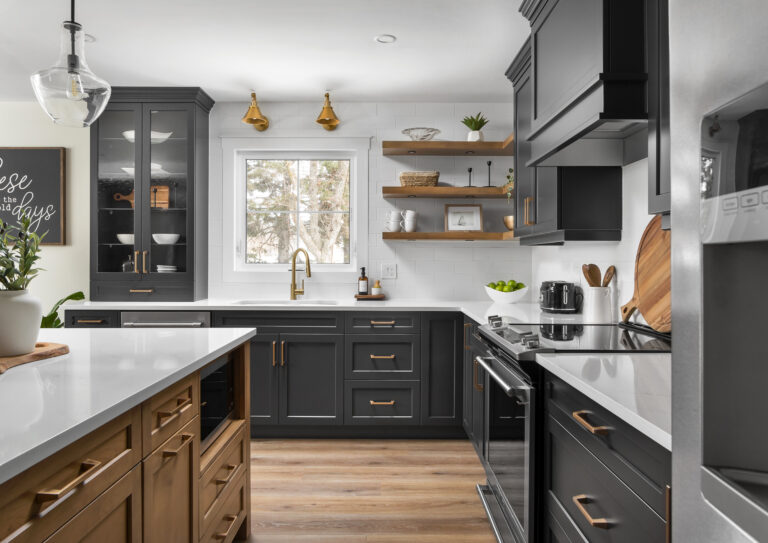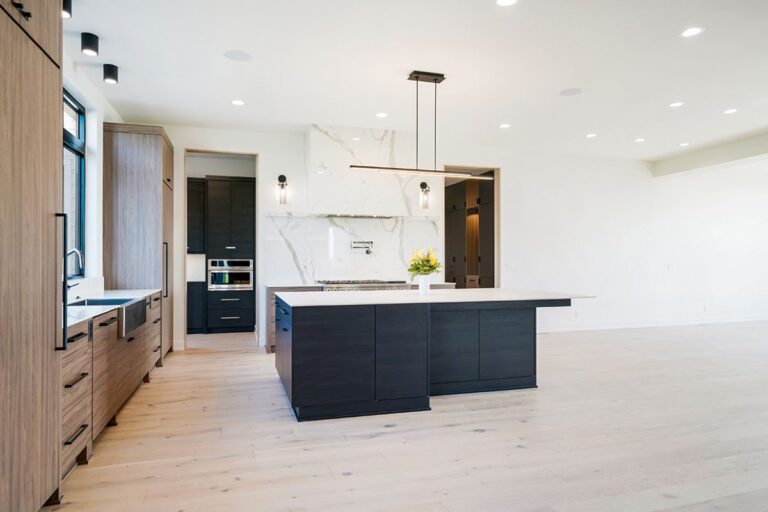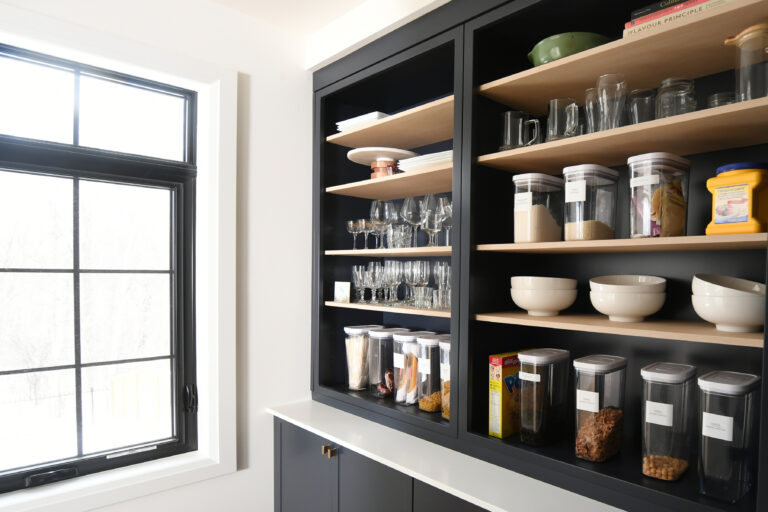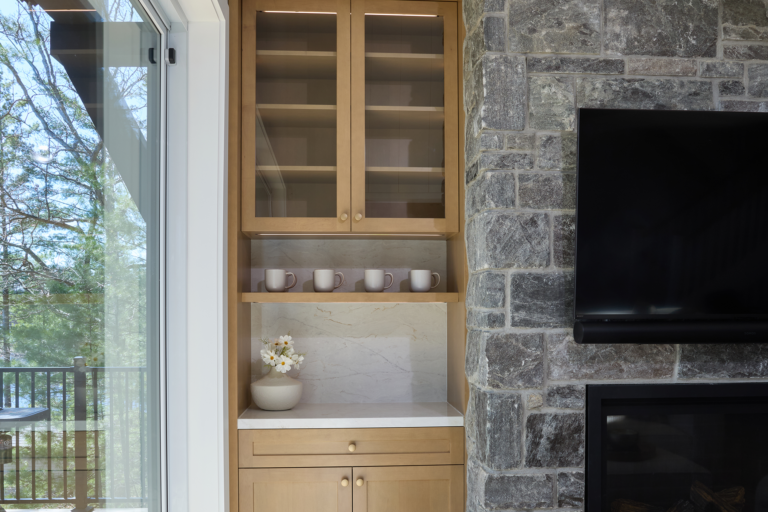
Who installs your cabinets depends on where you buy them. The person who designs your cabinets (and sells them to you) is not the person who is installing them.
Design and installation are two separate jobs, but sometimes they happen within the same team, sometimes not.
Here are the most common ways kitchen cabinet install is tasked out for your new kitchen depending on how you buy your new cabinets.
- In-house (Showroom) Install Team
- Hired Contractor
- You DIY Install
- Your Cabinetmaker Installs
And more importantly, tips to make sure you get a great install.
1. You buy through a showroom or independent designer
This is the classic route for custom cabinetry. You work with a kitchen and bath showroom or an independent designer on your layout and then the cabinets get installed one of two ways.
In-house install team.
Some showrooms have their own installers. This tends to be the smoothest experience. Communication is easy, they already know the products, and they work closely with the design team. Fewer handoffs, fewer things lost in translation.
The installer is held accountable by the business they work for, rather than working for themselves. Not to say independent contractors can’t do great work, but when everyone is on the same team and working towards the same goal, this can create a smoother experience.
A contractor they trust.
Other showrooms partner with an outside contractor or install company. These installers are experienced too, and if the designer and contractor have a good working relationship, the experience feels just as connected.
If the contractor often works with cabinets or is a dedicated cabinet contractor, then this is a great route for a precise and clean result.
With either route here, the important thing is to look for reviews and make sure the team installing your cabinets is experienced in cabinet install and has a good relationship with the showroom. This is especially important when it comes to arranging site visits, keeping the cabinet plan on track, and dealing with on-site issues in a timely matter.
You can get a good or bad experience with install from either option. This is why reviews are important to see what others experienced before you commit.
2. You're building a new home or working with a design-build firm
If you’re building from scratch or going through a design-build contractor, installation is usually handled for you. It’s the most hands-off path there is.
Your cabinets are one piece of a larger build, and the contractor coordinates the schedule, the trades, and the install. All this is done “in-house”. This means they have a dedicated “build team” that handles those steps of the process.
With a fully custom home experience, you’re getting a luxury service. Again, look for reviews to make sure you are getting the quality you are paying for.
3. You buy RTA cabinets and arrange install yourself
RTA stands for ready-to-assemble. (Think Ikea cabinets for example). You order the cabinets from a manufacturer or a store, and installation is on you. That means you either put them in yourself or hire a contractor to do it.
This is the most involved route. You’ll be doing the assembly and install, or finding a reputable installer, communicating the plan, and wearing the designer hat a little. You become the point person who keeps everything moving.
The upside is cost. If you already know a solid contractor, or there’s someone in your area with a strong reputation, this path can save real money compared to fully custom. Just go in knowing there’s more legwork.
4. You buy from a local woodworker or cabinetmaker
Plenty of smaller custom shops both build and install their own work. One team, start to finish. When it’s done well, you get a beautiful handmade product and a single point of contact the whole way through.
The thing to watch for is experience. Great woodworking and great installation aren’t automatically gaurenteed, so do your homework. Ask for photos of finished kitchens, request references, and look at past work in person if you can.
What actually matters on install day
No matter which route you choose, a good install comes down to the same handful of details. These are the things that separate a kitchen that looks right from one that always feels slightly off.
- Level, plumb, and square. Floors and walls are rarely perfect. A good installer shims, scribes, and adjusts so everything lines up, even when the room doesn’t.
- Clean fillers and scribing. The small pieces that close gaps against walls should look intentional, not like an afterthought.
- Aligned doors and drawers. Consistent gaps and smooth movement are a sign the install got the attention it needed.
- Coordination with other trades. Countertop templating, plumbing, and electrical all have to line up with the cabinets. A smooth handoff here keeps your project on track.
- A final adjustment pass. The best installers walk the whole kitchen at the end and fine-tune everything before calling it finished. The designer and contractor will often both confirm everything was done to plan.
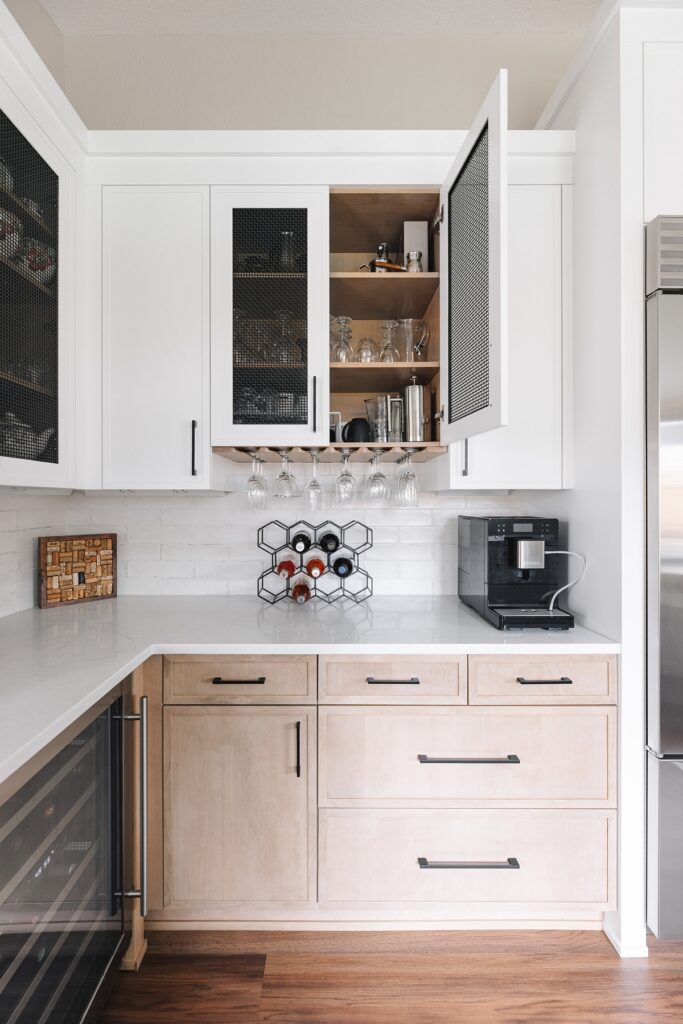
Who you should should choose to install your kitchen cabinets
Pick the path that fits your project, your budget, and how involved you want to be. Whatever you choose, remember to look at reviews to make sure you get a smooth experience from design to install.
Choosing a business that lives their values
A good experience comes down to communication. When your designer, the manufacturer, and the installer stay in sync, the project runs smoothly and you get fewer surprises.
That only happens when a company actually values relationships instead of just talking about them.
Look for a business whose values on the about page match what you get in person. Decor puts relationships first, and we work with designers and showrooms who do the same, so you can buy custom cabinets with confidence, from design to installation.