Sloped ceiling kitchen cabinets can be a challenge, but they also create an opportunity for a really unique design. A sloped ceiling adds shape and architectural interest to the space, but it changes how upper and tall cabinets need to be planned. These ideas are designed by professionals to help you make the most of your layout.
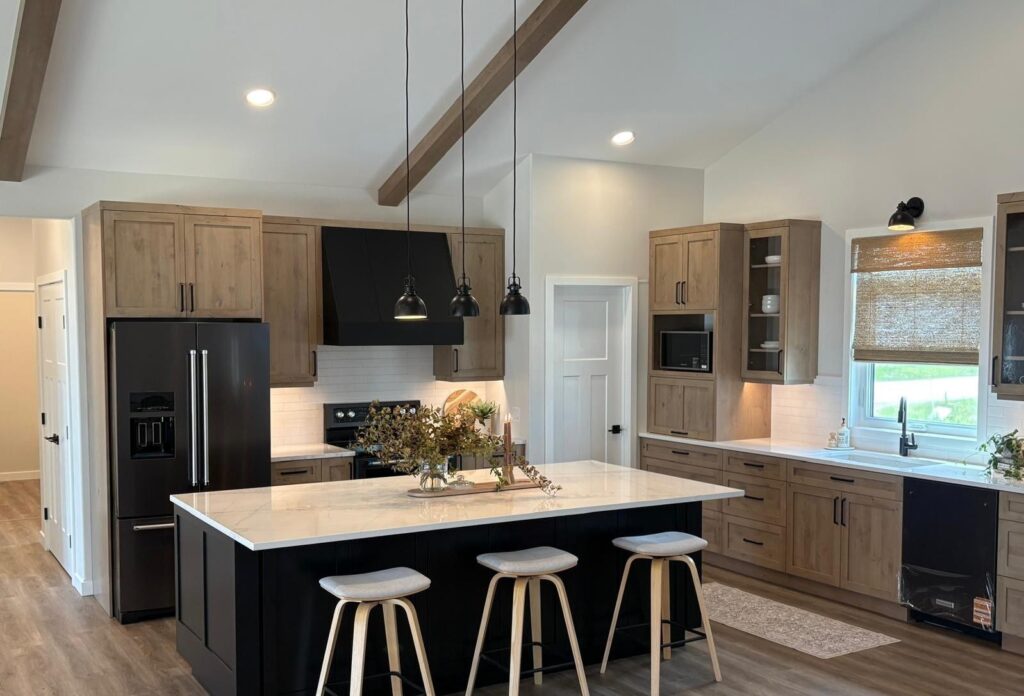
What to Consider for Sloped Ceiling Kitchen Cabinets
Sloped ceilings can change how cabinets fit and function. Before choosing a direction, think through a few key points:
- Where do you need storage most?
- How steep is the slope?
- Do you want to highlight or soften the ceiling?
A good layout is not just about filling space. It is about placing cabinets where they make sense for how you use your kitchen and for the style you prefer.
Sloped ceiling kitchen cabinets can either highlight the slope of your ceiling, or minimize it. Are you looking to draw the eye up or keep focus on a defined kitchen area?
A designer can help you create a plan that addresses these goals, which can be challenging to accomplish on your own.
3 Sloped Ceiling Kitchen Cabinet Ideas
Here are three ways to approach sloped ceiling kitchen cabinets that balance storage and design. Each idea complements the angle of the ceiling, while still giving you practical, usable cabinet space.
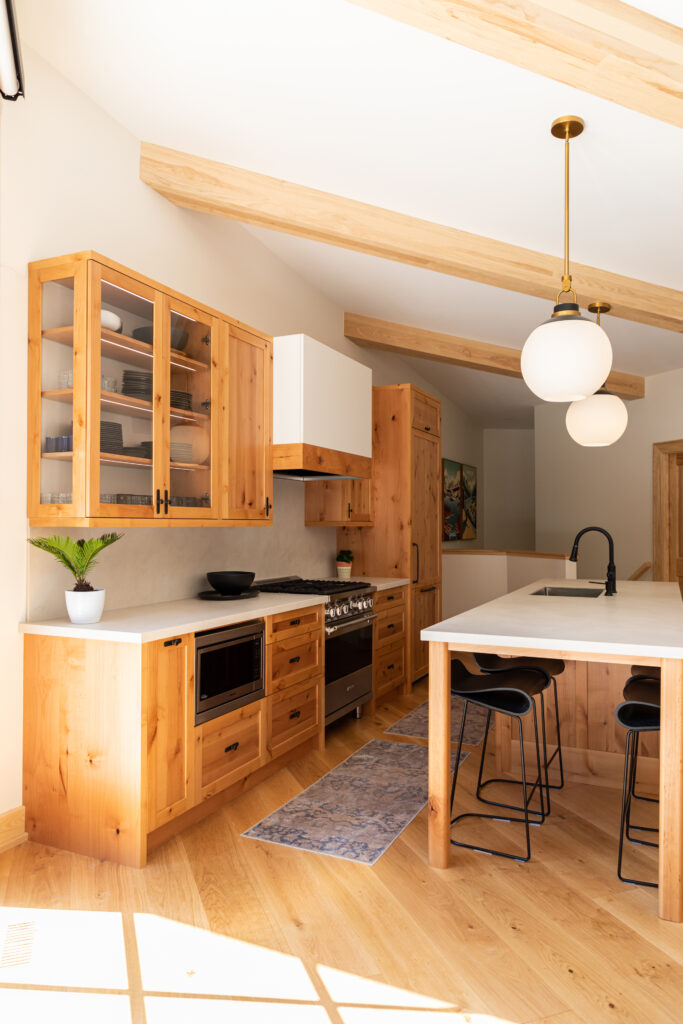
Idea 1: Keep Upper Cabinets Light and Open
This approach uses sloped ceiling kitchen cabinets in a way that feels open and balanced. The wood beams and knotty cabinets bring in a more rustic direction, while glass front upper cabinets keep the design from feeling heavy. Leaving space between the cabinets and the ceiling avoids a tight or crowded look, especially along the slope. A simple palette of warm wood and light finishes keeps the kitchen clean and easy to live with, while still letting the ceiling stand out.
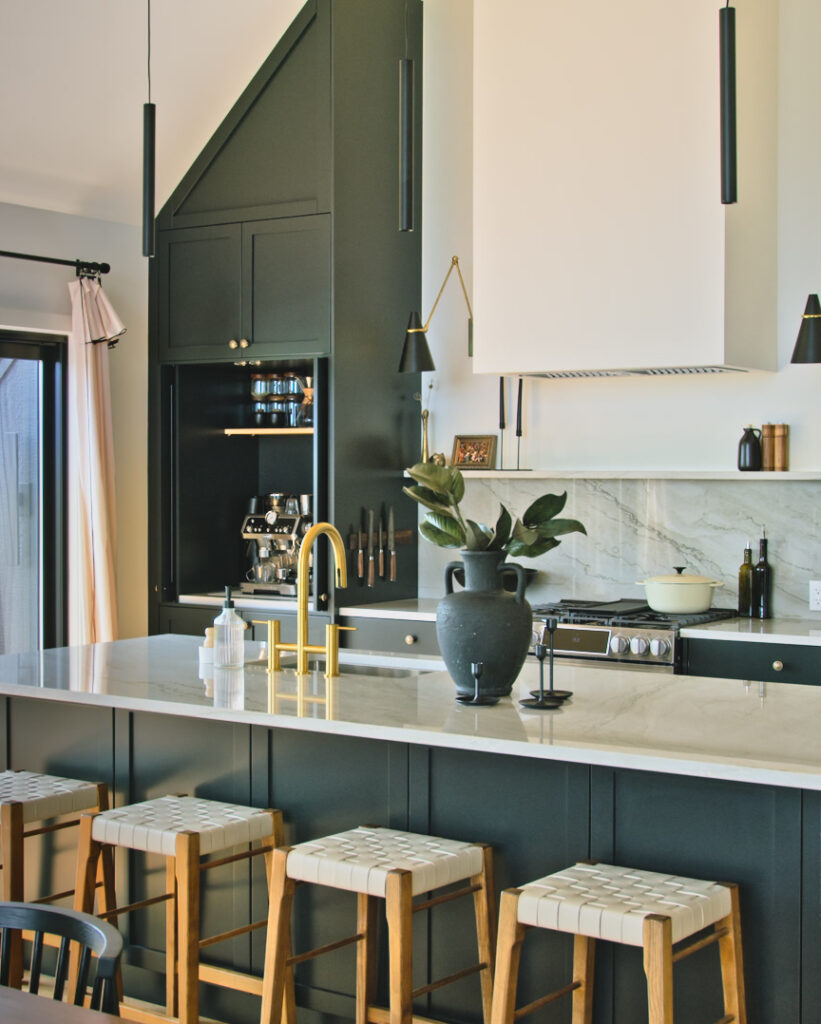
Idea 2: Follow the Slope With Tall Cabinets
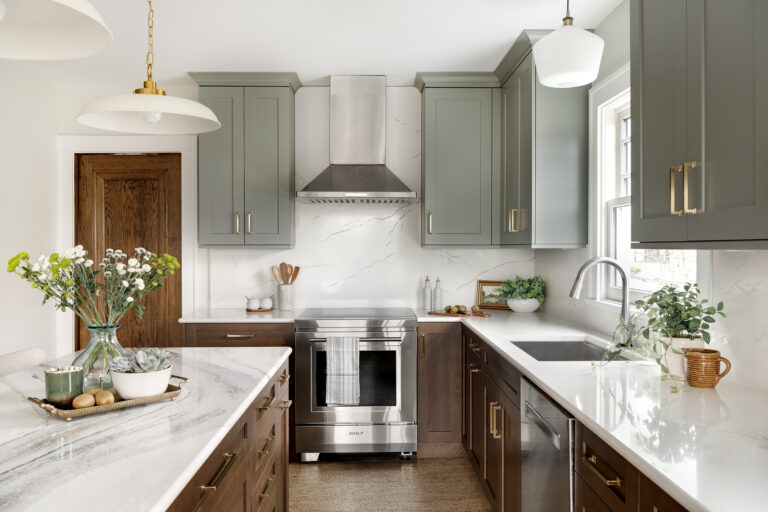
This design uses sloped ceiling kitchen cabinets to fully follow the angle of the ceiling. The tall green cabinet runs right up to the slope, creating a strong visual line that highlights the shape. The contrast between the cabinet color and the ceiling helps define the angle even more. A taller range hood draws the eye upward and works with the height of the space, keeping the whole wall feeling connected.
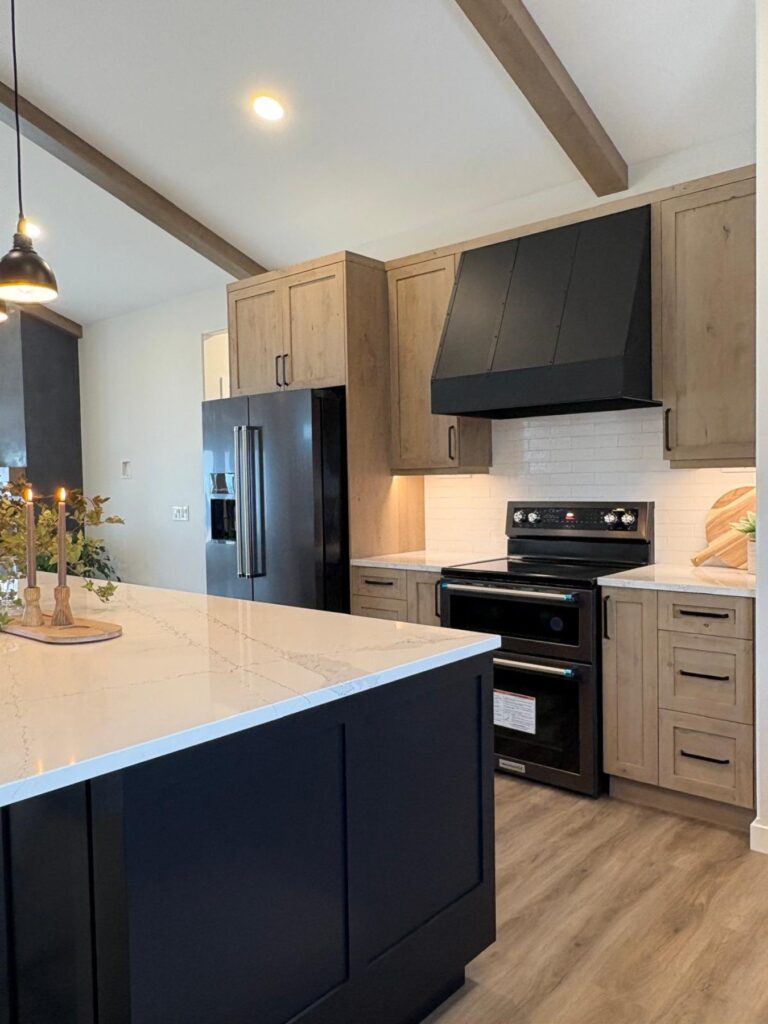
Idea 3. Use Cabinets to Anchor the Kitchen
This approach uses sloped ceiling kitchen cabinets to define the kitchen as its own zone. The transitional cabinet style keeps the focus on the cabinetry and layout, rather than the ceiling. By running cabinets at a consistent height, the design creates a clear visual break between the kitchen and the sloped ceiling above. This helps separate the kitchen from the surrounding living space, while still keeping the overall layout connected.