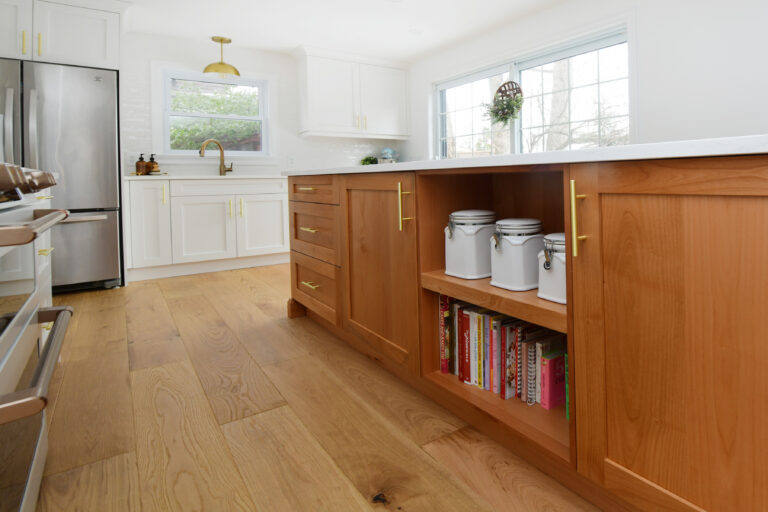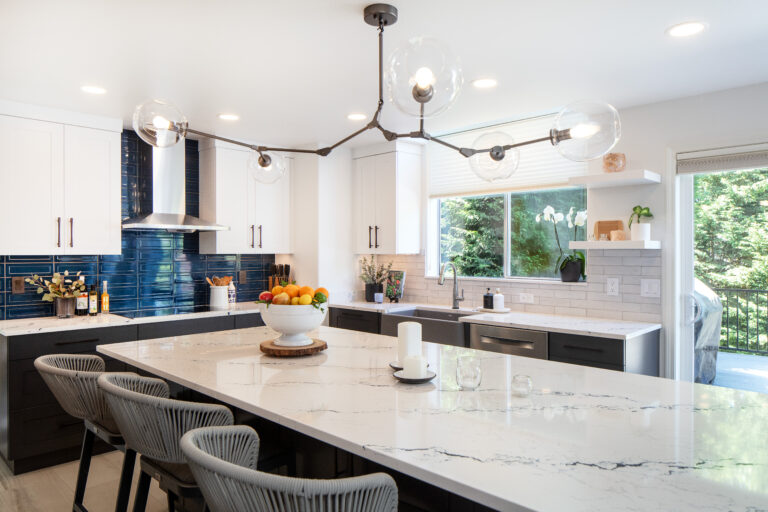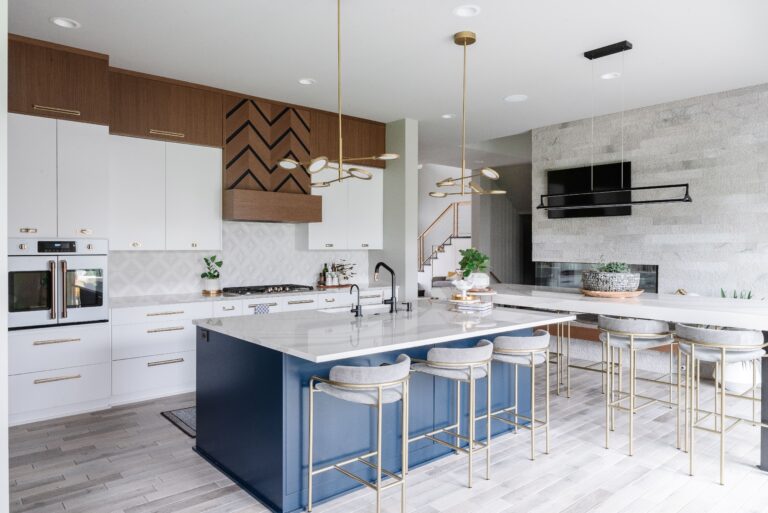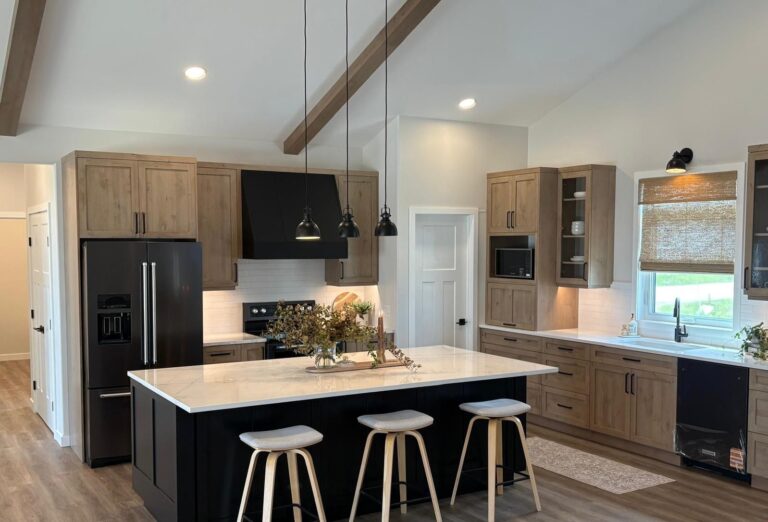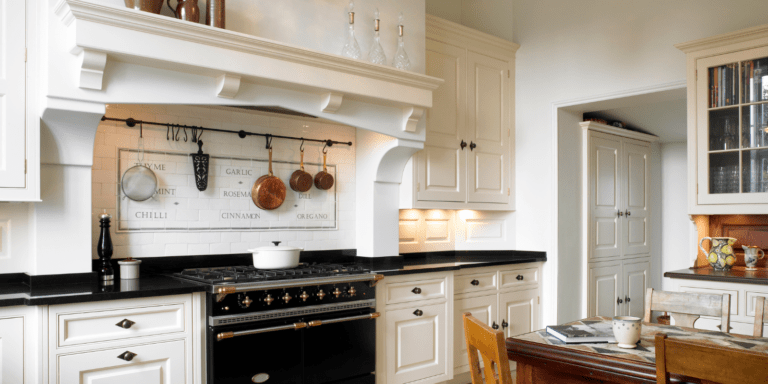
The debate of counter height vs bar height comes up in frequently kitchen design conversations, especially for spaces that want stool seating or are secondary kitchens.
Above all, you want your cabinets, countertops, island, or bar area to feel comfortable, functional, and aligned with how you use your space.
Most of today’s kitchens lean toward standard counter height for all cabinets. It supports flexible layouts and fits the way people work and gather in their homes. It’s the most common choice when comparing counter height vs bar height, but bar height still has its place in custom spaces (and we’ll talk about that soon).
From Decor Cabinet’s perspective of a cabinet manufacturer, we have unique experience seeing how often each cabinet height is chosen, and what we would recommend based on our experience.
Here’s our breakdown of counter height vs bar height.
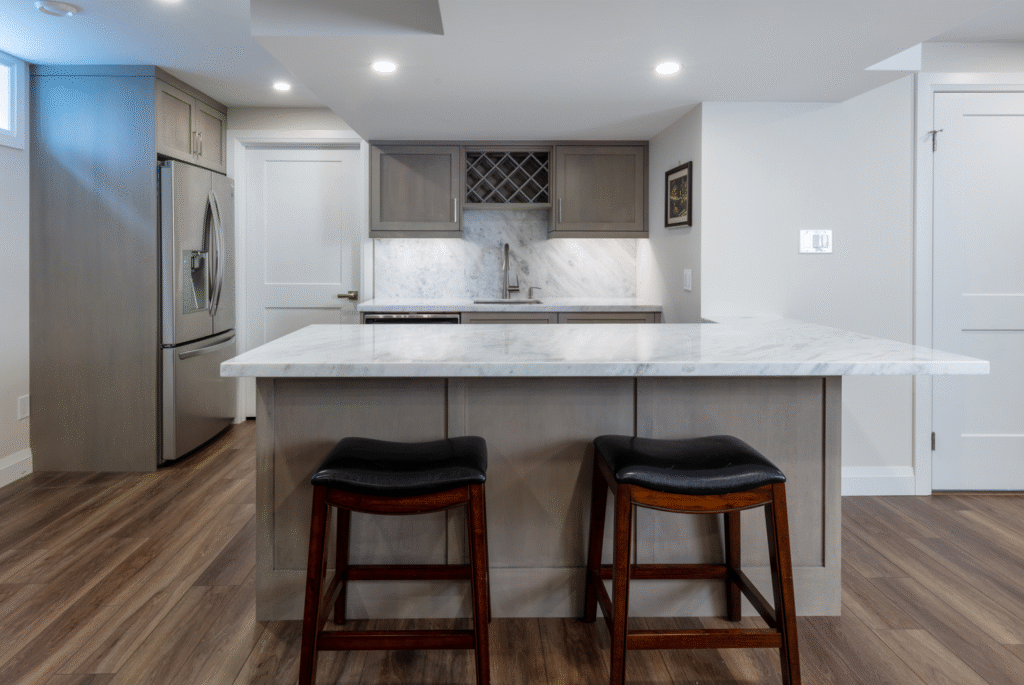
What are the standard heights for the counter and bar?
Standard Counter Height
Counter height is 36 inches from the floor to the top of the countertop.
This is the standard across most kitchens.
You see it on islands, perimeter cabinets, and almost every prep surface. It is comfortable for cooking, cleaning, and everyday tasks. It also supports the widest range of appliances and storage options.
Counter height works best for:
- Islands used for prep, cooking, and seating
- Families with kids
- Open layouts
- Clean, modern designs
What it means for your cabinets:
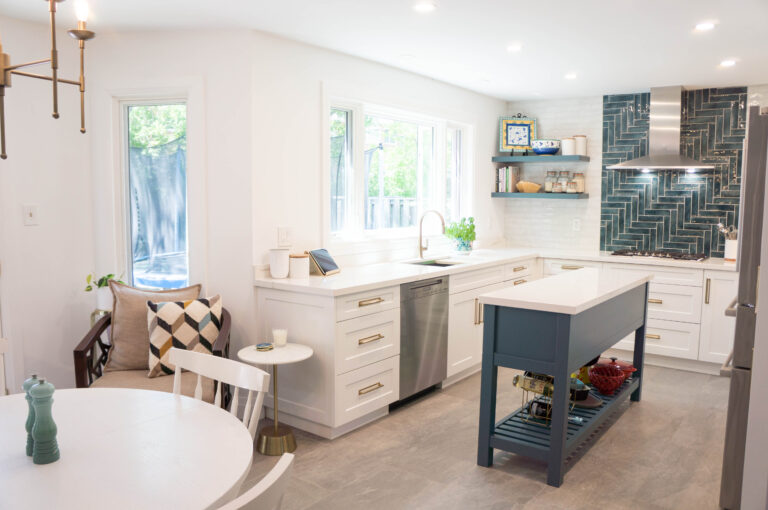
Your base cabinets and island will be the same height. This creates a consistent layout and looks very clean. This is a comfortable working height for most.
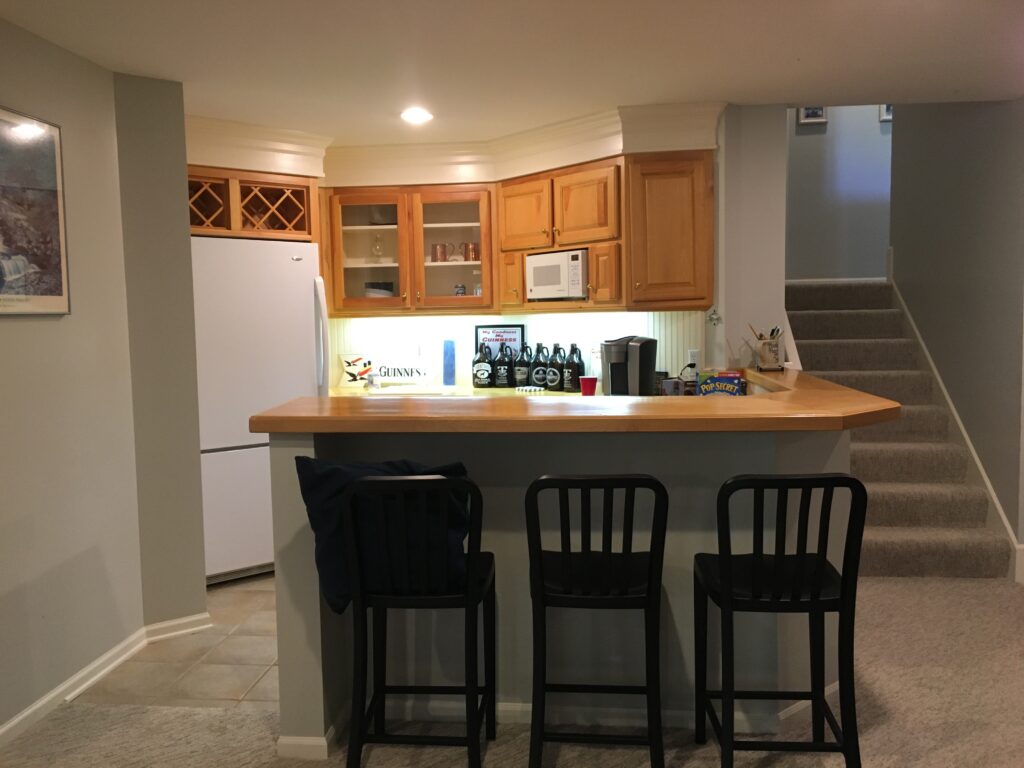
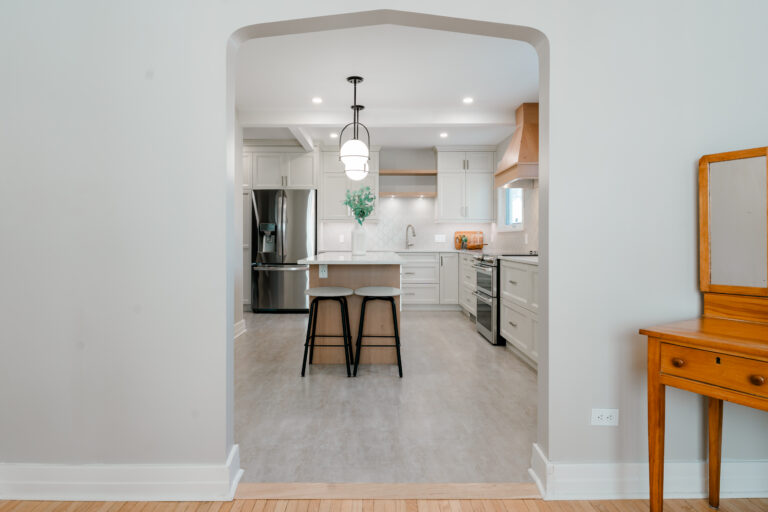
Bar height island, before renovation.
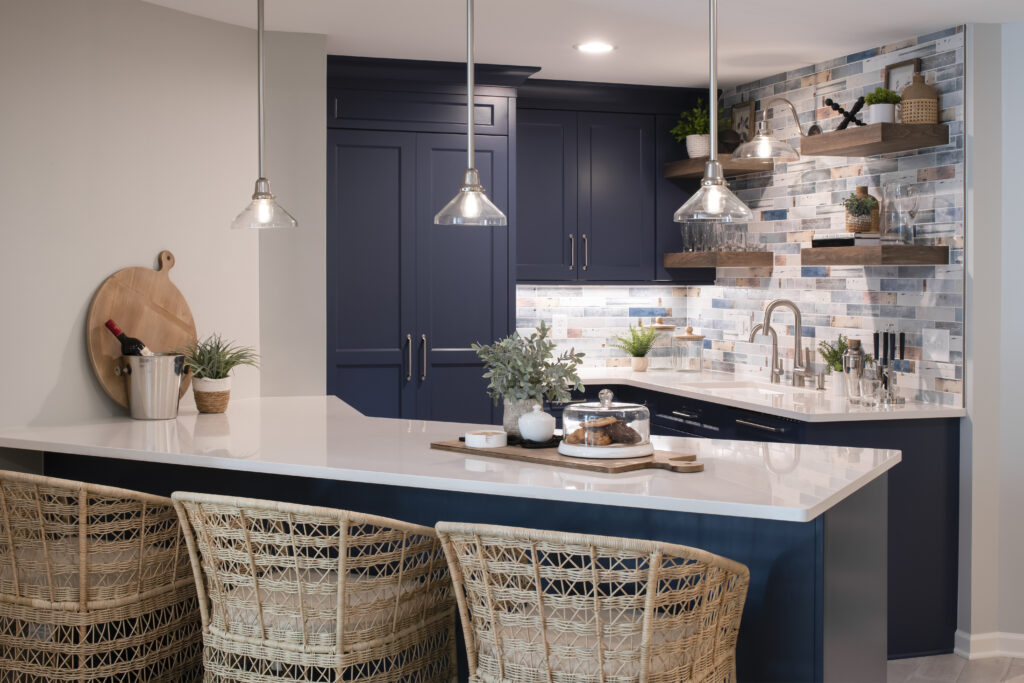
Counter height island, after renovation.
Standard Bar Height
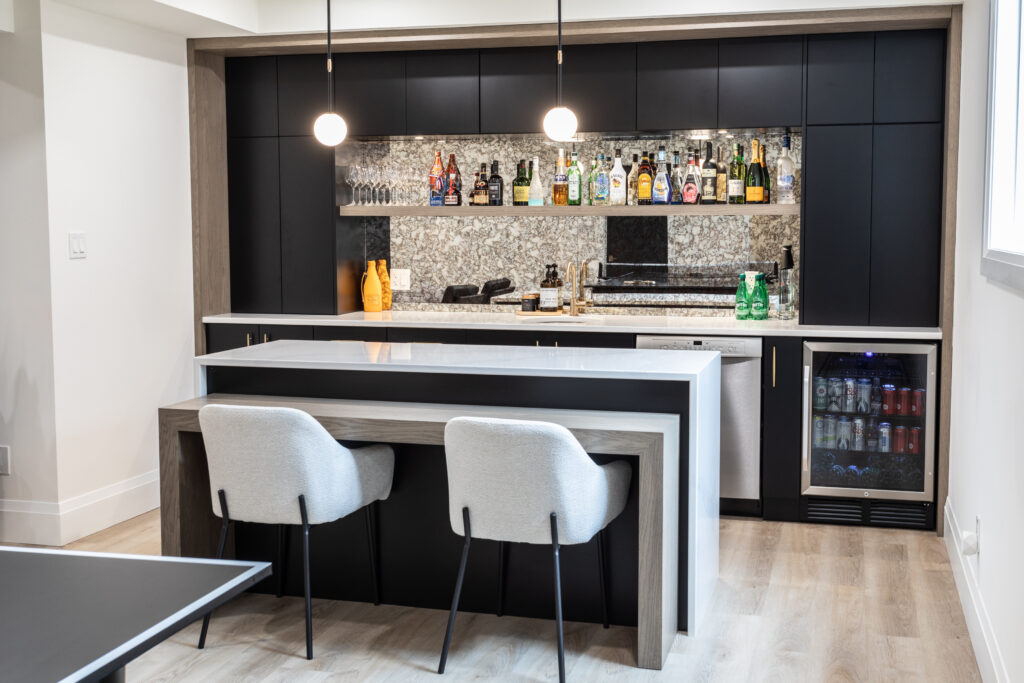
Bar height is 42 inches. You often see it in raised-bar islands or dedicated entertaining areas.
Bar height separates seating from the kitchen workspace. Some homeowners like this visual wall, especially for hiding prep mess. It creates a more upright sitting posture and uses taller stools.
Bar height works best for:
- A raised snack ledge
- Entertainment zones
- Basement bars
- Traditional layouts
What it means for your cabinets:
Bar height requires taller cabinet boxes or a built-up platform. Pay attention to the visual transitions, as the different countertop heights can create sharp changes in line of sight. This can be good or look off.
Counter height vs Bar Height: How to Choose
Your daily habits tell you more about which choice to make than trends do. The way you prep, cook, and gather shapes which height fits your space. When you compare counter height vs bar height, overall though, counter height is usually the more flexible choice, especially in a modern kitchen.
Here is what to consider.
1. How You Use Your Island
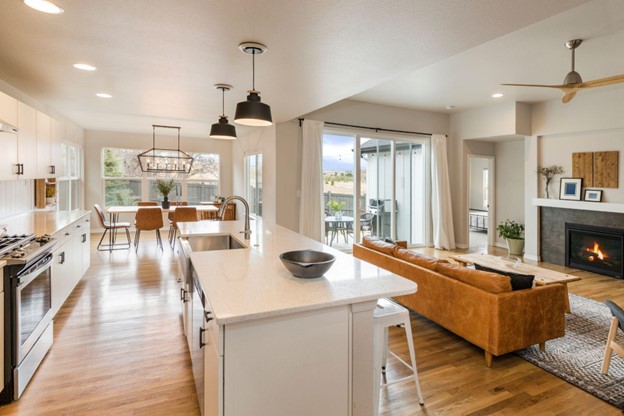
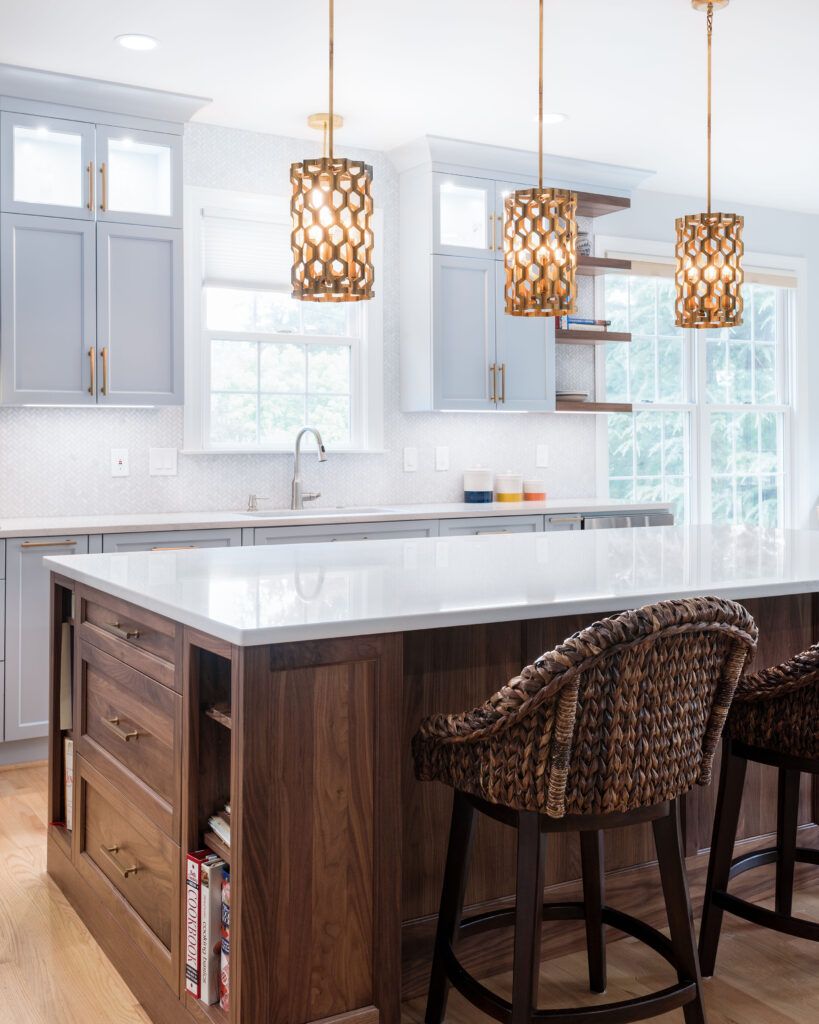
Most homeowners want their island to do more than one thing. Multifunctional islands with lots of storage are by far in the majority chosen when compared to breakfast bars or small peninsulas. Large islands become a prep zone, a cooking space, a homework area, and a seating spot.
With a counter height island, you get one large, level surface that works for every task. It keeps the island open and easy to use.
Bar height limits the island in function. The raised zone becomes a place only for sitting, not ideal for prep or cooking. That separation can make the island feel less flexible. But, if you primary purpose for the island is for sitting and chatting or entertaining, then bar height might work better.
What we see most:
Multifunctional islands perform best at counter height.
2. Comfort for Everyone Using the Space
Counter height seating is easier for most people. Kids climb up more easily. Adults feel more stable. You move from standing to sitting without a big height change.
Bar height stools require a higher step and feel taller.
Some people like that, but many prefer the simplicity of counter height. Especially when you consider aging in place.
3. The Look You Want
Today’s kitchens lean toward clean, continuous lines. One surface height gives the space a calm, uncluttered look.
Counter height fits this style best. You remove visual breaks. The room feels more open. Designers choose this approach often because it supports both modern and transitional design.
Bar height introduces a second tier. This creates a visual division that can feel dated or heavy in newer homes. However, this isn’t always the case. Especially with stand alone bar areas, bar height feels luxurious.
4. Appliance Fit and Workflow
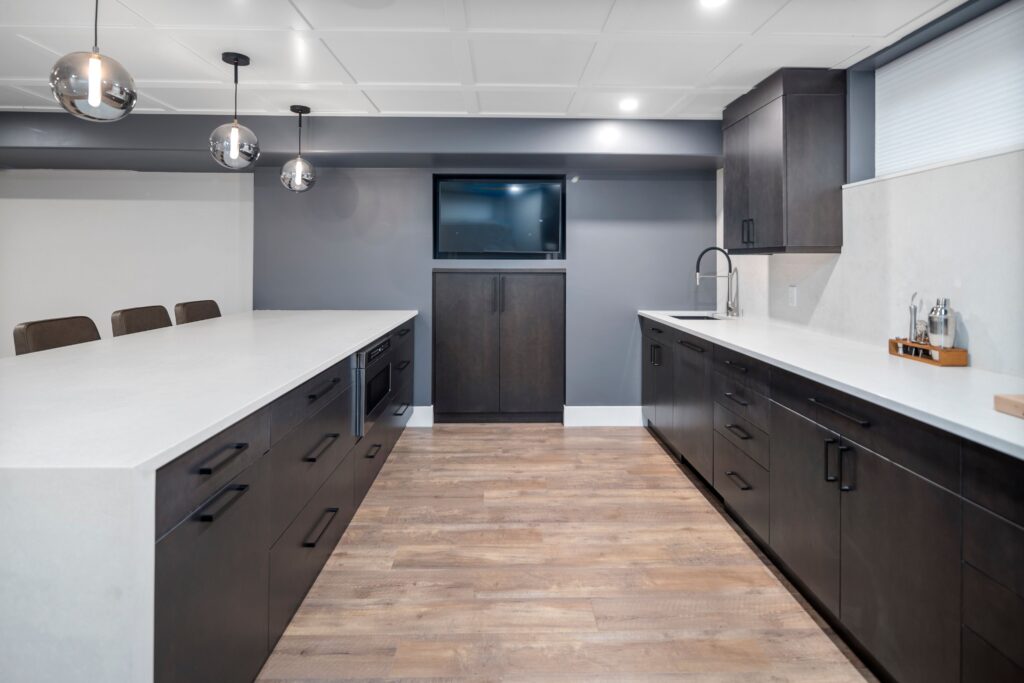
Appliances are usually built for counters at 36 inches. This counter height keeps everything aligned and predictable.
If you choose bar height, appliance placement needs extra attention. Most people keep the work side at counter height and raise only the seating side if they want both.
Where Each Height Works Best?
Best Spots for Counter Height:
- Islands
- Main prep zones
- Long perimeters
- Open-concept layouts
- Double island layouts
- Homes focused on clean, modern lines
Spaces where flexibility matters
Best Spots for Bar Height:
- Basement bars
- Beverage stations
- Entertainment-focused seating
- Traditional kitchen layouts
What We're Seeing in North American Homes
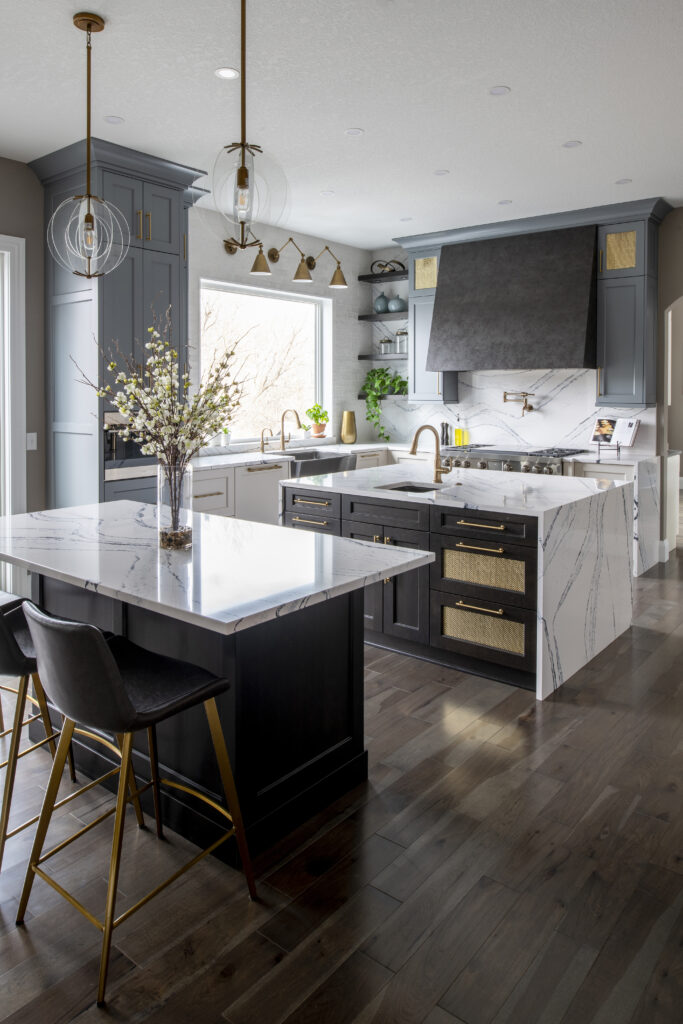
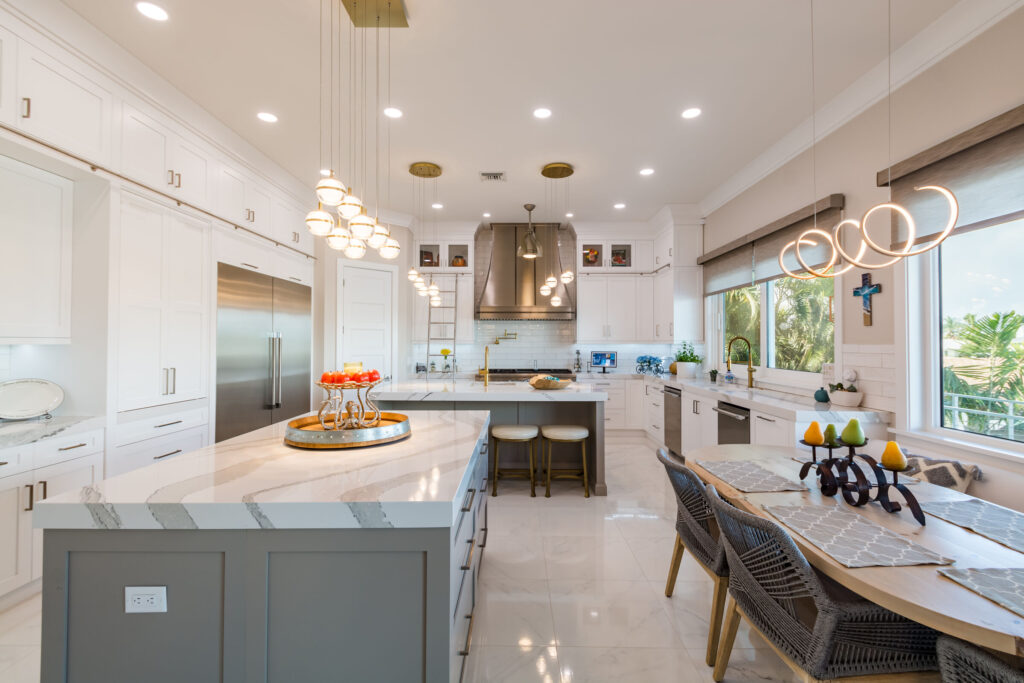
In our 2024 and 2025 Elite Design Awards submissions, counter height islands dominate. Designers continue to pick one height for a clean, modern feel. Table height appears occasionally in specific layouts, but bar height is rare in kitchens, usually only being chosen for basement bars.
This reflects how people use their kitchens today. They want one surface to support many needs.
The Verdict: Counter Height Wins for Most Kitchens
When you compare counter height vs bar height, counter height is the better choice for most modern kitchens. It supports how people prep, cook, and gather. It also fits current layouts and long-term design preferences.
- Counter height supports multifunctional islands.
- Counter height fits today’s design direction.
- Counter height is backed by real project data.
If you want comfort, usability, and a layout that stays current, counter height is the clear pick.