Thermofused melamine or often called Thermally Fused Laminate is a common material choice for cabinets. Often also called TFL panels, melamine panels, or high-pressure laminate, this modern invention is a decorative panel used for a variety of purposes, often in kitchens, bathrooms, and other home cabinetry.
It’s a material we offer through our Zonavita cabinet line and a popular choice in contemporary and transitional design.
There can be some confusion on how this material is made, the quality of it, and ultimately if it is a good long term choice for cabinets. We’ll answer these questions from our cabinet manufacturing perspective and give you 3 reasons why it’s a great choice.

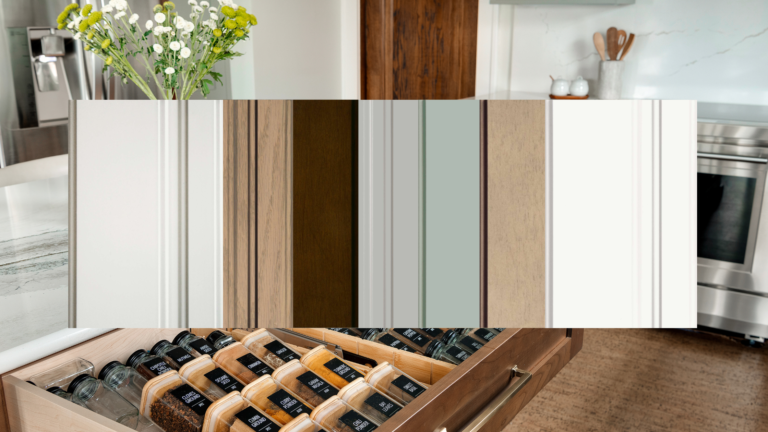
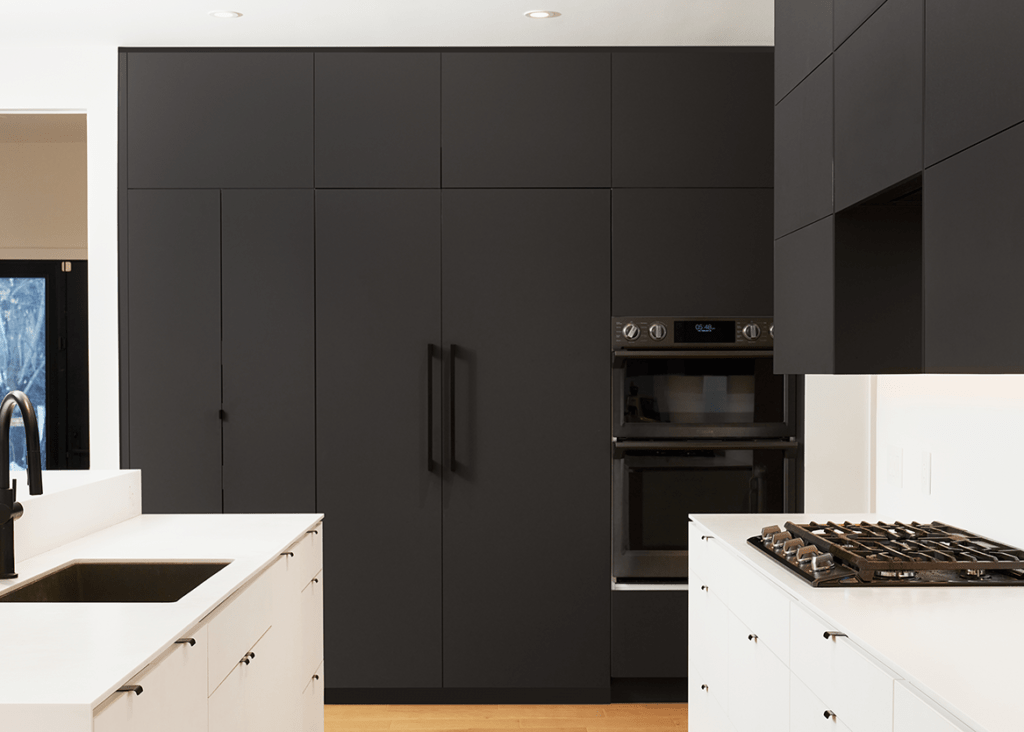
TFL (melamine) cabinet panel with white linen finish.
What is thermofused melamine?
The first thing to understand about TFL panel construction is that melamine is technically an ingredient in the process of making the panel.
Melamine resin is used to saturate paper (or kraft paper) to a quality fiberboard (particle board). With thermally fused laminate, this is done with a high temperature. The result is a decorative and functional construction material perfect for a variety of cabinet applications: including kitchens, bathrooms, commercial applications, and other multifunctional spaces.
There are a range of melamine products on the market for cabinets, not all are created with equal quality. For example, lower-grade LPL (low pressure laminate) is bonded with less heat and sometimes an added adhesive.
So to differentiate this further, all Thermally Fused Laminate products are “melamine” but not all melamines are TFL.
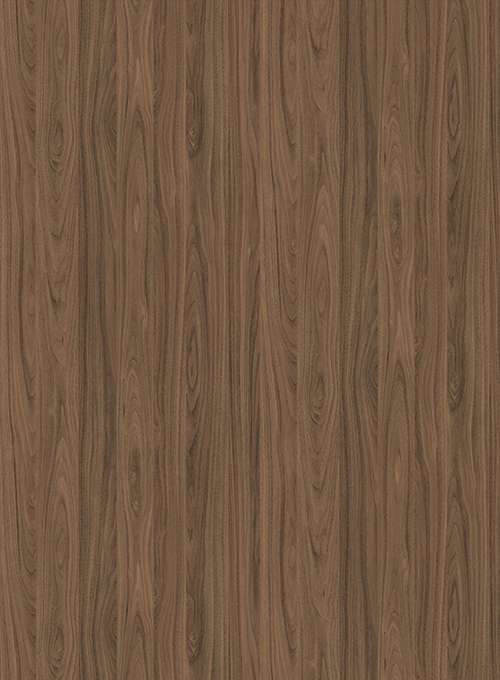
TFL (melamine) cabinet panel with walnut (faux wood) finish.
Is melamine the same as TFL?
As we mentioned above, melamine is an ingredient for making TFL. However, it is common to call all products that are made with melamine “melamines”. It’s shorthand for products that are made in this manner.
The problem with this is that there is a wide range of quality standard for melamine products, with TFL and LPL as variations of paper fused particleboard products.
Quality in all the components and in the fusing process can vary, which makes them not at all the same.
When comparing the two, TFL is a step up from basic melamine board. It’s bonded with more heat and pressure and no separate glue, which makes it more durable and less prone to chipping than the melamine cabinets people associate with the 80s.
Is Thermally Fused Laminate the same as thermofoil?
No, and this is a common misconception. Thermofoil is a thin vinyl film that’s heat-sealed over MDF or particleboard, which can peel or bubble when it’s exposed to heat and moisture over time.
Thermofused melamine (TFL) is fused directly to the particle board under high heat and pressure, rather than wrapped around it. That makes it a harder, more stable surface.
It is also worth a note here that many TFL products are edge banded with PUR glue (including the ones we manufacture), which is a high quality glue that is water resistant.
Unlike the more common EVA glue used in standard cabinetry, PUR won’t soften or let go under kitchen steam and humidity, which is exactly where lower-grade edge banding tends to fail first.
Are melamine cabinets good?
Yes. Thermofused melamine holds up well for everyday use in kitchens and bathrooms. It doesn’t warp and swell the same way wood can and is very resistant to dents, scratches, and stains in a way painted cabinets aren’t.
While quality varies between manufacturers, objectively, these products are good in different ways than real wood or painted HDF.
How are melatime products different from wood or painted cabinet doors?
Melamine TFL products have their place. They work great in slab or shaker door styles and we have 3 reasons why people choose them below, but here are the reasons why some still choose wood or painted cabinets:
- Repairability: wood and paint refinish easier later on
- Custom color matching: more choices available with paint and stain
- Door styles: wider range available with other materials than TFL
- Preference: some people simply love wood or painted HDF more
The misconception is that these reasons make TFL cabinets less good. It just makes them different, or better suited for certain projects.
What do Thermofused Melamine (TFL) Cabinets look like?
There are two main types of TFL finishes.
- TFL Textured
- TFL Smooth
Textured melamine products are “stamped” or pressed with realistic patterns of wood grain, concrete, or linen. This is done during the heat and pressure process with a steel plate that matches the intended design. This creates not only a visually appealing faux wood or concrete product, but one that feels like it too.
Smooth TFL products have a finish more similar to painted cabinets, but with a durable finish that doesn’t chip the way paint can. The color of the cabinet is in the decorative paper, which sits under the melamine resin layer. In contrast, paint sits on top of HDF or wood which is why refinishing is possible.
3 Reasons to Choose TFL Cabinets
Keep reading for 3 reasons why homeowners and designers alike are choosing this cabinet material for their cabinet boxes, door fronts, and drawers.
1. Design Flexibility and Consistency
With its smooth finish and contemporary door profile options, melamine cabinetry is becoming is an increasingly popular choice. TFL panels really shine in simple minimalistic design.
- Flat slab door styles look clean and elevated in contemporary spaces.
- Shaker cabinet doors are one of the most common styles, working well in both traditional and transitional designs.
These cabinet styles are available in a variety of colours and finishes. White and other neutral colours are a timeless, classic choice. Two-toned or coloured cabinetry provides unique visual interest and is a growing trend in home design. Faux wood grain and other textures are common on flat door styles for a modern look.
With a range of styles now available to create trending cabinet designs, melamine cabinets are competing well against wood and painted options. Especially if homeowners are budget conscious, but still want a high quality custom result.
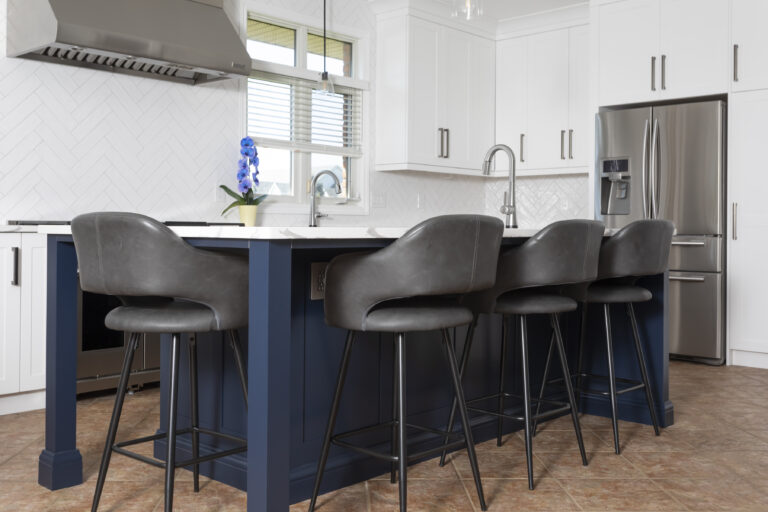
It’s not only the range of color and style that is important here, but the consistency in appearance that designers and homeowners love. Wood grain looks consistent (no surprise changes in grain) and warranty doors are easier to replace because the same blue decorative paper is used on every blue door (rather than mixing blue paint to match).

2. A Budget Friendly Option
One of the biggest benefits of TFL melamine is the price. If you are looking to elevate a space on a budget, this cabinet option is for you. Due to its construction, TFL is more cost-effective when compared to solid wood.
It also requires less maintenance costs over time. Wood ages beautifully, but wood cabinets will need to be cared for to ensure their longevity.
A lower price is often associated with lower quality, but with TFL that is not the case. Laminate cabinet manufacturing has improved greatly over the years and the improved technology allows for a higher quality product.
TFL panels are an affordable and maintenance-free cabinet option.
3. Durable and Scratch Resistant
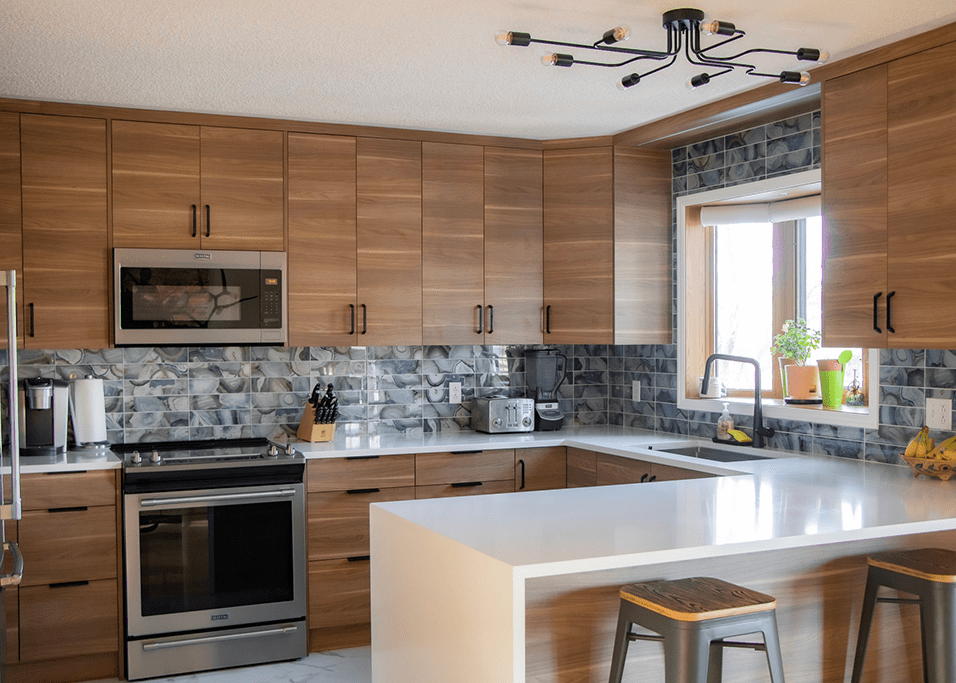
Arguably the most attractive benefit of melamine is durability. These durable cabinets resist scratches, moisture, and staining. The material is uniformly strong and holds up to daily use. The decorative surface is easy to clean, which is a must in kitchens and bathrooms. This cabinet will maintain its colour and finish, no matter what you throw at it.
High-pressure laminate is not your average “built it-yourself furniture” wood veneer. This is a refined, high-quality cabinet that will last the test of time.
An example where melamine works well: white oak TFL cabinets
A great use for TFL products are for faux White Oak kitchens. White oak is a trending finish in kitchen design right now. Homeowners and designers love white oak, with it’s rift cut straight grain and even appearance. However, with natural white oak, there will always be some variation.
A representative from Columbia Forest Products says that “everyone wants real wood until they understand variation in wood, then they want perfection.” Even within the same grade of wood (the system of quality standard), there will be slight differences. It is harder for wood suppliers and manufacturers to achieve a perfect white oak look with real wood. That is what is beautiful about wood, the natural grain pattern and slight variations.
Did you know: the color of wood can vary within the same species of oak depending on weather conditions on where it is grown?
With TFL in a white oak finish the product doesn’t have any natural variation, you can guarantee that every door looks the same since it was created with the same “stamp” and decorative wood grain paper.
That is a great benefit because those who want a very even looking white oak will certainly get that with TFL.
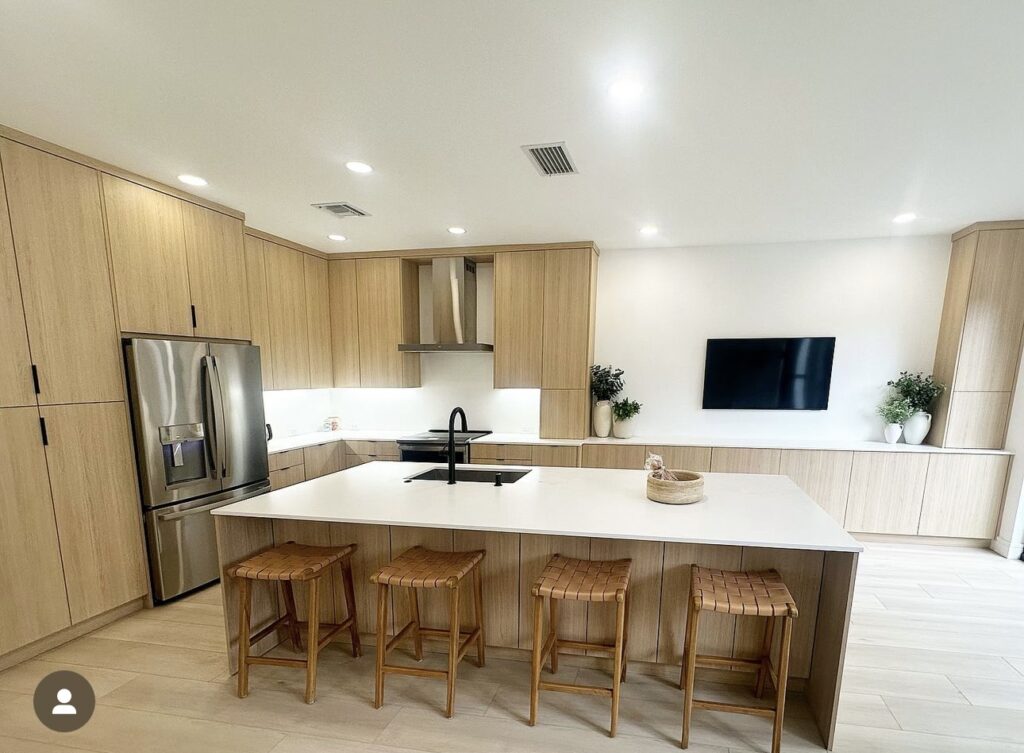
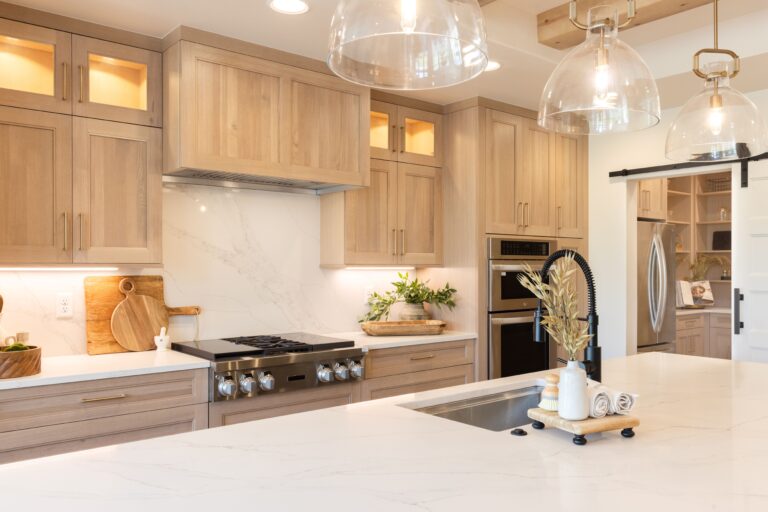
One of our partners Ultimate Kitchen and Bath used Vicenza Oak from Zonavita to achieve an even vertical grain across all the slab doors in this modern kitchen.
So Why Buy Thermal Fused Laminate?
Thermally fused laminate makes a quality cabinet that is stylish, cost-effective, and long-lasting. This decorative surface is great for a variety of spaces due to its durability and versatility.
So whether you are planning a kitchen reno, designing a commercial space, or choosing cabinetry for your new build, thermally fused laminate is an excellent choice.

This post was updated for 2026!