Second to cabinets, the backsplash is one of the most impactful decisions in a kitchen renovation. Designers have experience coordinating materials and finishes to make a wow-worthy design.
As a cabinet manufacturer working with kitchen designers across North America, we see this decision made well on a regular basis. The difference between a great backsplash choice and a poor one usually comes down to design fundamentals, not budget.
Here’s what professional designers are actually thinking about when they make this choice and how you can create a beautiful kitchen like the pros.
What Professional Kitchen Designers Prioritize in a Backsplash
A professional designer isn’t simply choosing a tile they find appealing. They’re working through a deliberate set of principles to ensure the backsplash fits the space, the cabinetry, and the client’s needs. Here’s what designers prioritize when choosing a kitchen backsplash:
- Style of the space
- Visual interest and balance
- Current design trends
- Scale of tile
Of course designers need to consider budget and client preferences. Decide what the kitchen needs to look like first, then work within the budget to get as close to that as possible. Budget follows the design direction, not the other way around.
Matching the Backsplash to Your Kitchen Style
The backsplash contributes to the style of the kitchen more than people expect. The more organic and textural the backsplash, the warmer and more rustic the space will feel. The more polished and smooth, the more modern it reads.
Decide what the kitchen is meant to feel like. Warm and lived-in, or clean and contemporary? That answer narrows down the options you have.
Create Visual Interest and Balance
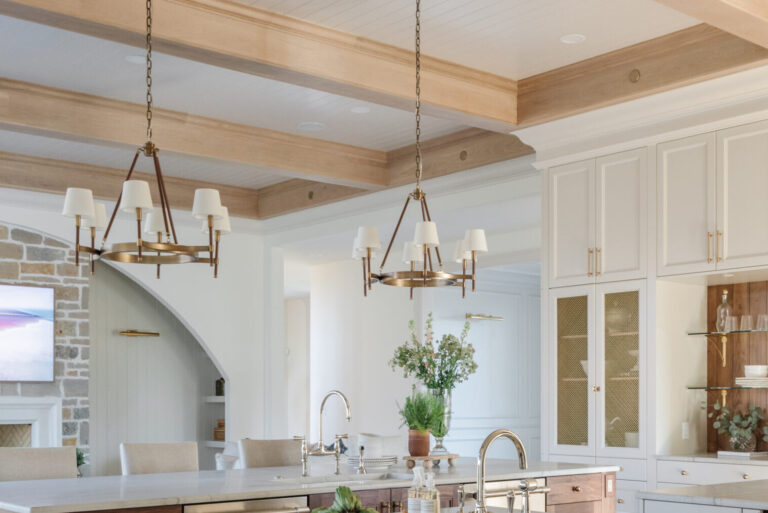
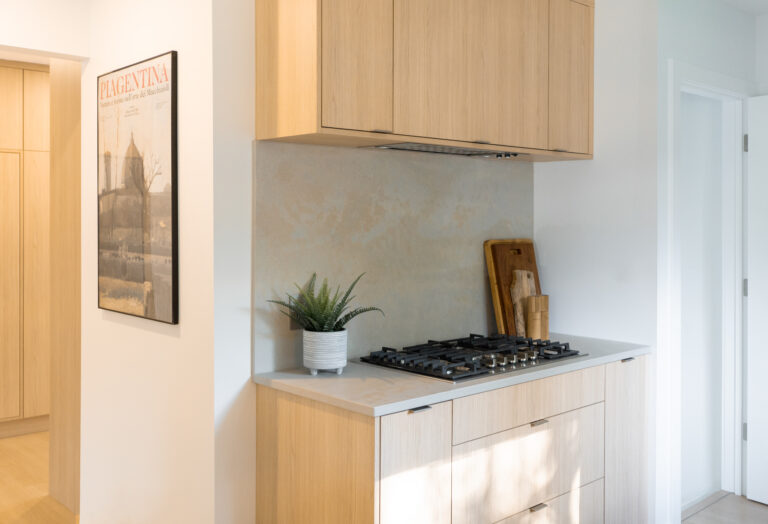
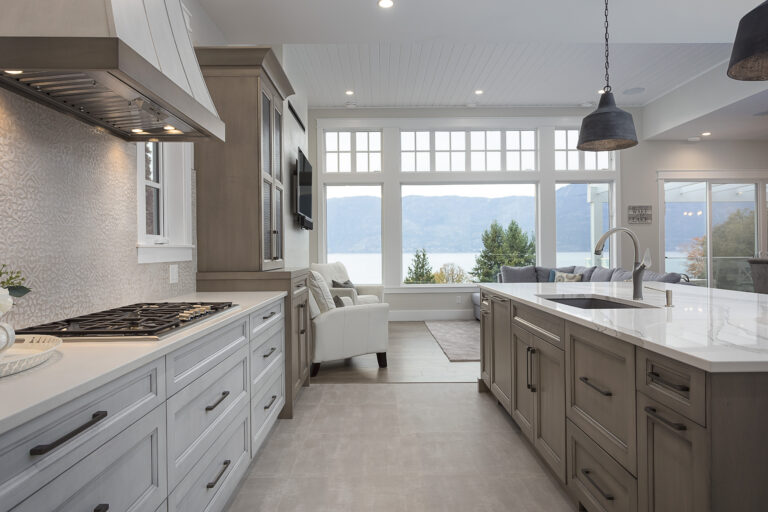
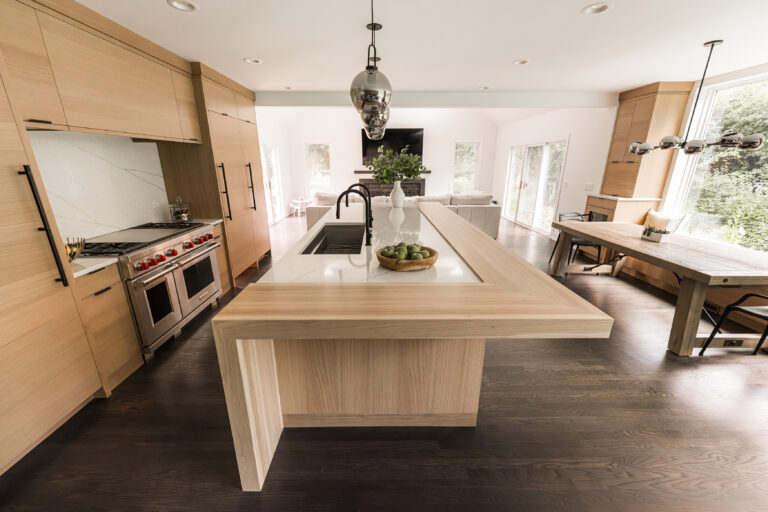
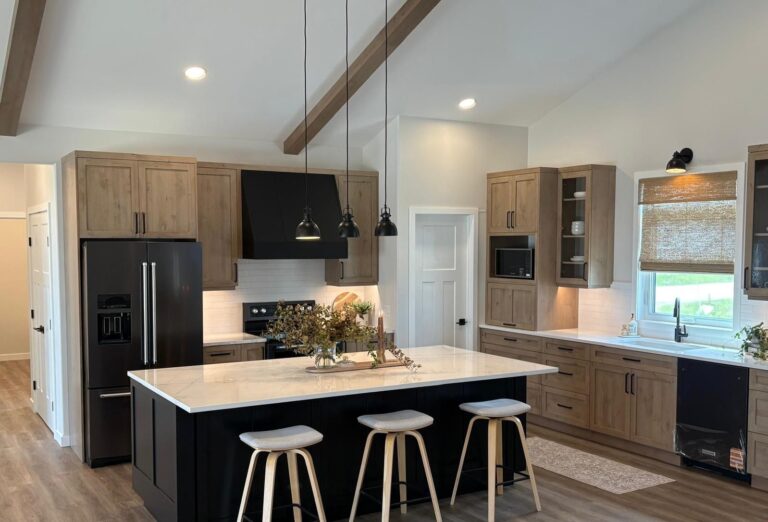
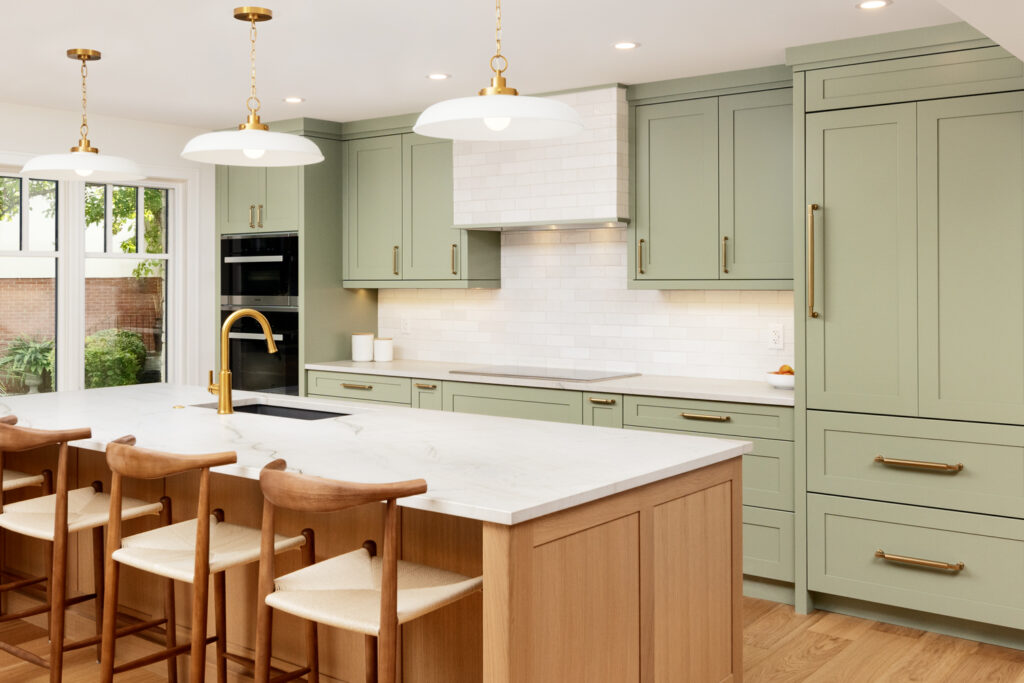
The backsplash should balance the cabinetry, not mirror it. Wood cabinets already bring organic texture and warmth to the space, so the backsplash can afford to be more polished. Painted cabinets are already smooth and uniform, so the backsplash is where you introduce organic texture and variation to create depth.
Think like a designer: Look at your cabinet finish and ask what it’s missing. If the cabinets are doing a lot, the backsplash should pull back. If the cabinets are clean and simple, the backsplash can do more. See backsplash ideas for wood cabinets, black countertops with wood cabinets, and backsplash pairings across cabinet styles here.
Consider Current Design Trends
The materials showing up in professionally designed kitchens right now are zellige tile, large format tile, and slab backsplashes. All three prioritize material quality and finishes with real depth.
While not a high demand trend, other tile options like mosaic, brick, or subway tile, are chosen to fit into a specific kitchen style or to avoid trends for a more classic look.
Designer tip: Trends come and go, but designers usually prioritize quality finishes and natural materials.
Choosing Scale of Tile
Tile size needs to be proportional to the space.
- Large format tile in a small kitchen feels heavy.
- Small detailed tile in a large open kitchen gets lost.
- Full height behind the range creates a focal point without committing the entire kitchen to it.
What Homeowners Often Get Wrong
Even with good intentions and a clear inspiration, a few consistent mistakes come up in backsplash selection. Here are some common design errors:
- Ignoring undertones and mixing warm and cool tones
- Choosing a dated or budget tile that reads as cheap
- Reaching for peel and stick as a quick fix
- Not committing to one style direction