Flour is one of those kitchen staples you do not think much about until something goes wrong. If it is not stored properly, it can spoil, absorb moisture, or attract pests. Many people end up dealing with contamination without even realising how it started. In this blog, you will learn how to store flour correctly so it stays fresh and free from unwanted visitors.
What Causes Pantry Bugs in Flour?
Pantry pests are more common than most people think. These include weevils, small beetles, and moths that are naturally drawn to dry food items like flour, rice, and grains. If you have ever noticed tiny bugs in pantry shelves or containers, chances are they came from one of these sources.
These pests can enter your kitchen in different ways. Sometimes, they are already present in packaged flour as eggs that are not visible to the eye. In other cases, they come from nearby infested items and spread across your pantry. Warm and humid conditions make it easier for them to grow and multiply.
Once they get access, they settle into open or loosely stored flour and start reproducing. That is why storage plays a bigger role than most people expect.
The Best Way to Store Flour
Here are some of the best ways to store flour:
1. Use Airtight Containers
Switching to airtight containers is one of the simplest ways to protect your flour. Glass jars, metal tins, or strong plastic containers work well.
These containers keep moisture out and stop outside odors from getting in. More importantly, they create a barrier that prevents pests from entering. Thick, well-sealed containers are especially useful in stopping weevils from spreading.
2. Store in a Cool, Dry, Dark Place
Heat and humidity can spoil flour faster and attract pests. To learn to store flour correctly, always store your flour in a cool and dry area, away from direct sunlight. A closed cabinet or pantry shelf works well as long as it stays dry.
3. Keep It Away From Original Packaging
Flour usually comes in paper or thin plastic bags that are not designed for long-term storage. These packages are easy for pests to get through. Transferring flour into a proper container right after opening reduces that risk.
4. Filtering and Sifting
Sifting flour before storage can help remove any impurities or hidden particles. While it may not catch everything, it adds an extra layer of precaution. It also helps keep the flour fresh and light.
5. Vacuum Sealing
If you store flour in larger quantities, vacuum sealing is a good option. It removes air and creates a tightly sealed environment that pests cannot survive in. This method also helps extend shelf life.
6. System of Rotation
Always use older flour before opening a new pack. This simple habit, often called rotation, prevents flour from sitting unused for too long. It also reduces the chances of spoilage.
How to Store Different Types of Flour
Not all flours behave the same way. Some last longer at room temperature, while others need cooler storage to stay fresh. Here’s a simple breakdown you can follow:
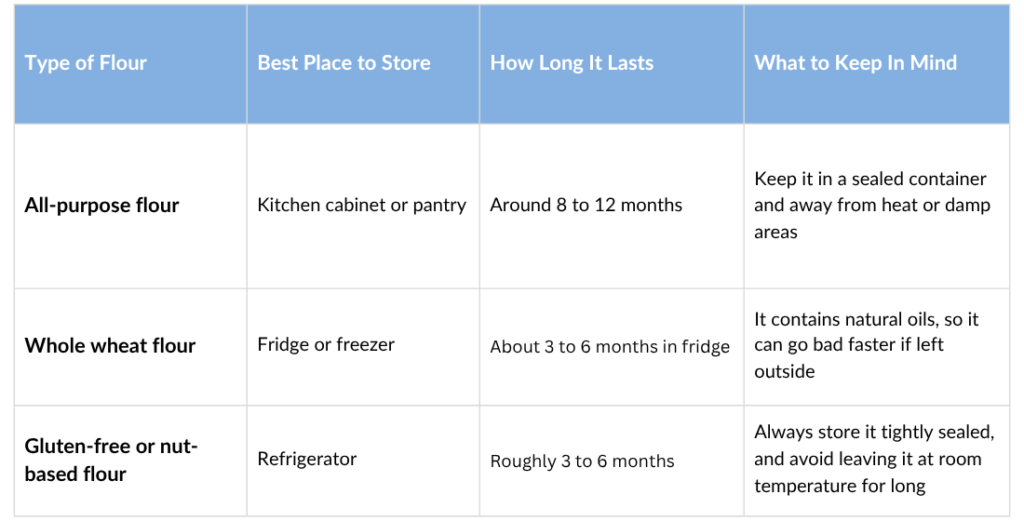
Note: Flours that contain more natural oils, like whole wheat or almond flour, tend to spoil quicker. Keeping them chilled helps maintain their taste and quality for a longer time.
Common Flour Storage Mistakes to Avoid
Here are some storage mistakes you should avoid:
1. Leaving Flour in the Original Bag
The original packaging is not strong enough to protect flour from moisture or pests. Always transfer it to a proper container after opening.
2. Storing Near Heat Sources
Keeping flour near stoves, ovens, or warm areas can reduce its shelf life. Heat speeds up spoilage and can also attract pests.
3. Ignoring Expiry Dates
Even if flour looks fine, it does not last forever. Using flour past its shelf life can affect taste and quality. Always check dates before use.
4. Not Sealing Containers Properly
A loosely closed lid defeats the purpose of storage. Even small gaps can allow air and pests to get in. Make sure containers are sealed tightly every time.
Storing flour the right way is not complicated, but it does require a bit of attention. With the right containers and storage habits, you can avoid spoilage and keep pests away. A few small changes in how you handle flour can save you from bigger problems later.