
Here are kitchen flooring ideas for your next renovation.
This guide focuses on how to pair floors with cabinets in a way that looks intentional and stylish, using common design principles.
Why Kitchen Flooring and Cabinets Need to Be Planned Together
Flooring and cabinets take up the most visual space in a kitchen. They should never be chosen in isolation of one another. Ignoring this relationship is one of the most common design mistakes in choosing kitchen flooring.
Flooring Is the Largest Impact Design Choice Next to Cabinets
Other than the cabinets, flooring has the biggest effect on the kitchen. It sets the base tone for the entire space.
Light flooring can make cabinets feel brighter. Dark flooring can ground the kitchen and add contrast.
Flooring should support the cabinets, not compete with them, and since the flooring is often chosen and installed before the cabinetry, it has the largest impact in the design.
3 Kitchen Flooring Ideas That Work With Wood Cabinets
As a rule, warm wood cabinets pair best with warm flooring tones. Cooler tone cabinets work with cool tone floors.
If the cabinets show strong grain, the flooring should stay visually quiet. The opposite is also true, if you have knotty wood floors, choose a wood cabinet with a more subtle grain pattern. (Unless you really want the space to look like rustic wood cabin).
This creates balance without flattening the space. Good design is all about mixing color and texture to create harmony.
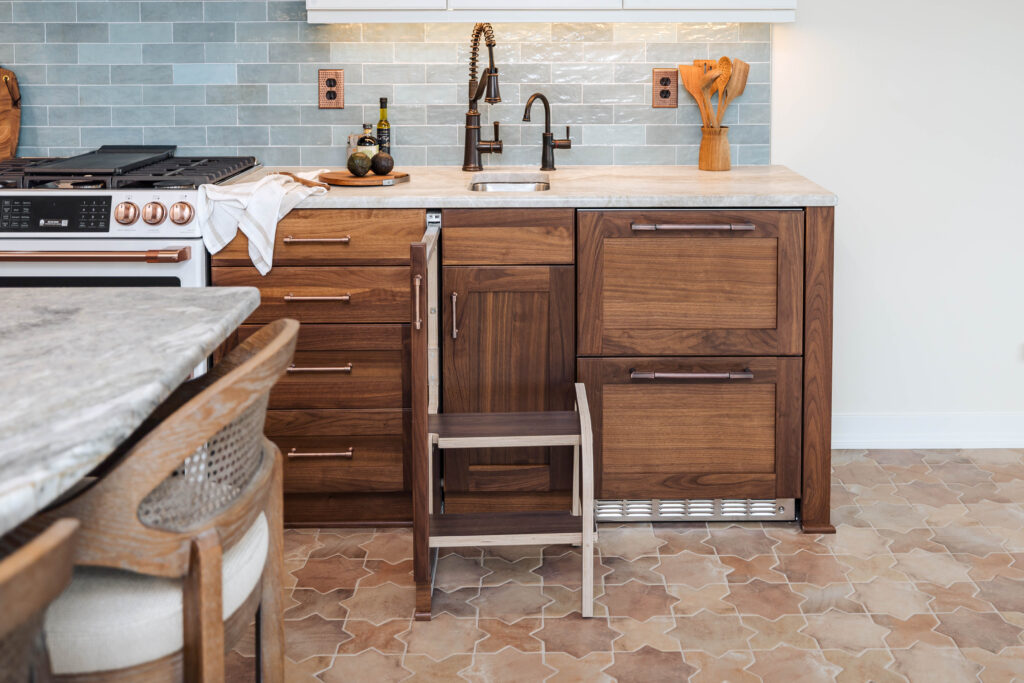
Wood Cabinets with Terracotta Tile Flooring
The terracotta-style flooring brings in a subtle nod to Mediterranean and old-world design. Its warm tone aligns naturally with the wood cabinetry, creating a grounded and cohesive look. The soft variation in the tile adds character without distracting from the cabinets, allowing the space to feel layered and lived-in rather than styled or trendy.
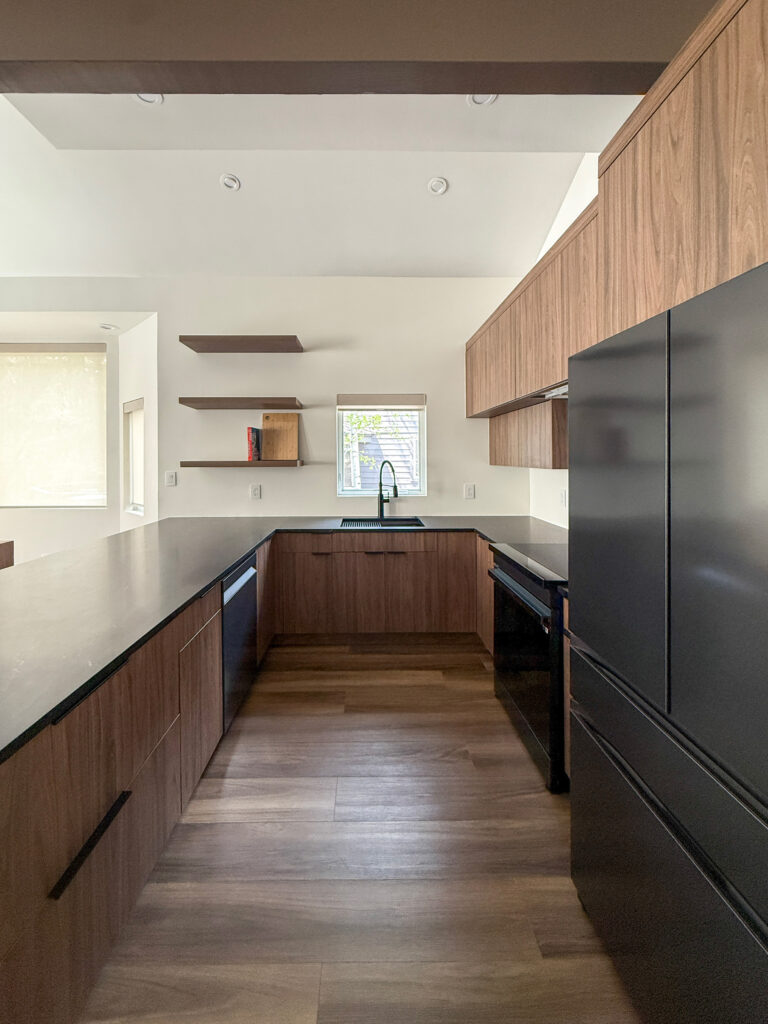
Walnut Flooring with Slab Front Cabinets
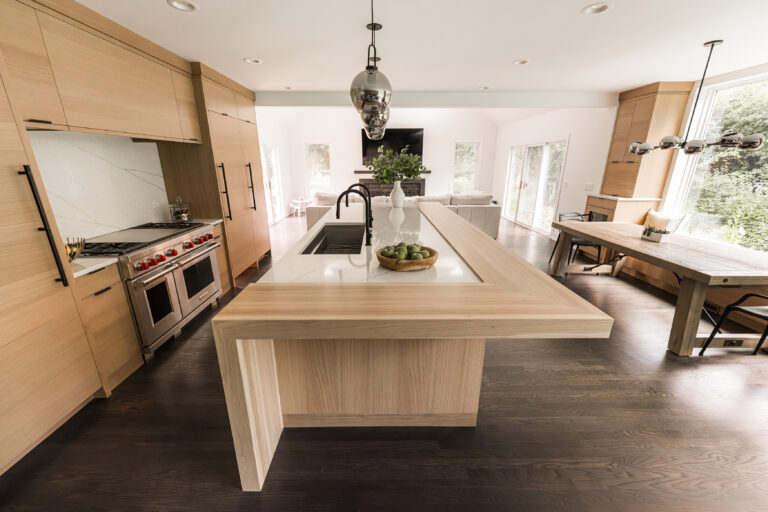
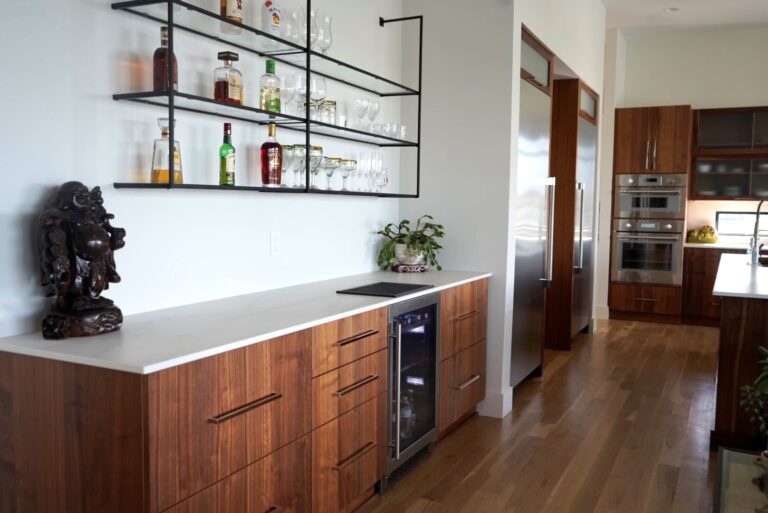
The walnut flooring reinforces the vertical slab wood cabinets while adding depth through a slightly darker tone. The shared warmth between the floor and cabinetry keeps the space cohesive, while the contrast prevents the wood surfaces from blending together. The clean grain of the flooring and cabinets both stay defined. This is a modern take for wood flooring with wood cabinets.
Rustic Flooring with Oak Cabinets
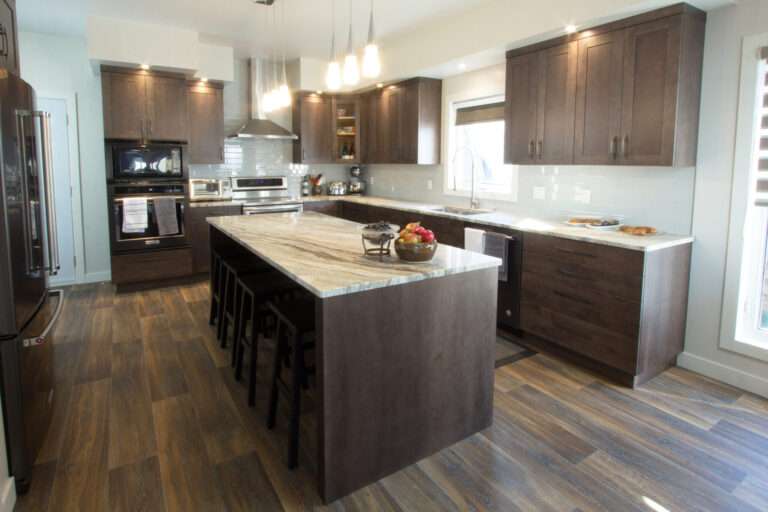
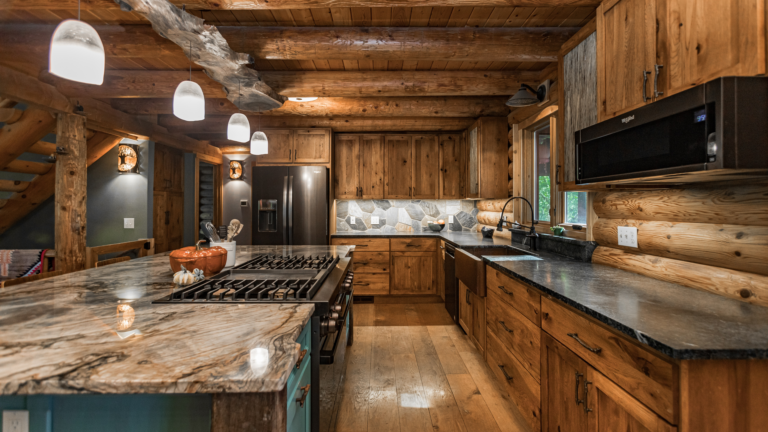
The rustic knotty wood flooring and traditional oak cabinetry both feature strong, visible grain, which leans fully into the rustic style. The flooring brings movement and texture through knots and variation, while the cabinets echo that character in a more structured way.
3 Kitchen Flooring Ideas That Work With Painted Cabinets
Painted cabinets give more flexibility with flooring. If choosing wood flooring, painted cabinets can pair easier since there is no competing wood tones or gain patterns to consider.
- Light cabinets with light flooring create a calm look.
- Light cabinets with darker flooring add definition.
- Bold cabinet colors need flooring that stays muted.
Classic White Cabinets with Wood Flooring
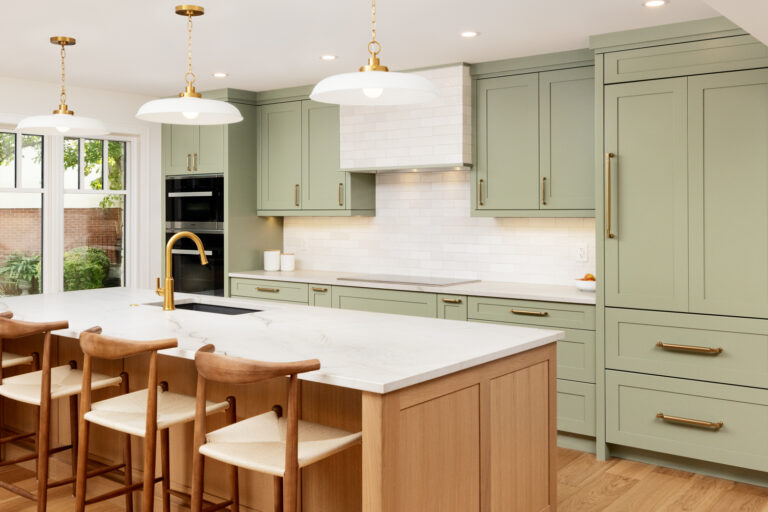
White cabinets pair well with medium tone wood flooring because the warmth of the floor balances the clean finish of the cabinetry. The wood tone prevents the kitchen from feeling stark while keeping the overall look classic and bright.
White Cabinets with Darker Wood Flooring
White cabinets pair well with darker wood flooring, such as a walnut look, because the contrast gives the kitchen structure and depth. The darker floor grounds the space and keeps the white cabinetry from feeling flat or overly bright. The darker wood tones bring a modern look to the room.
Black Flooring with Custom White Cabinets
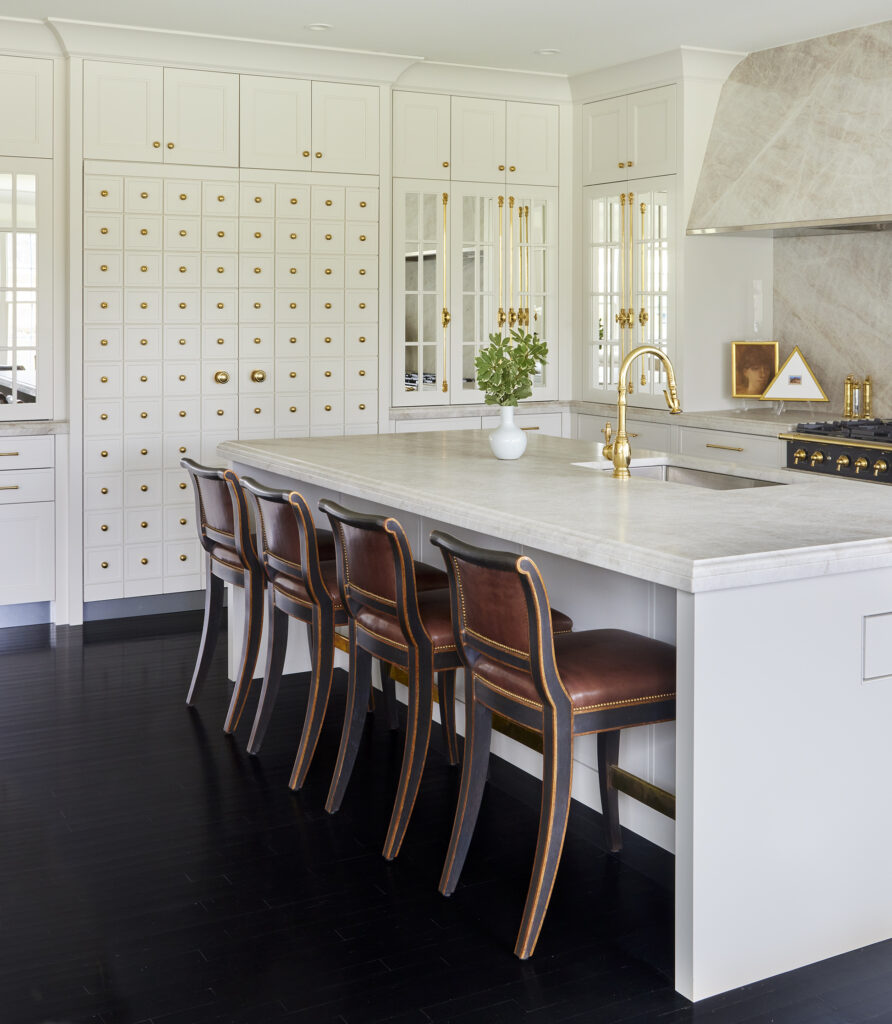
Black flooring with white cabinets creates a strong high-contrast look that feels custom and intentional. The sharp separation between surfaces adds a sense of luxury, especially in custom kitchens. This pairing feels unexpected in the best way, giving the kitchen a tailored presence rather than a standard finish combination.
7 Kitchen Flooring Ideas for Mixed Cabinet Finishes
Two-tone kitchens are increasingly common. In kitchens of mixed materials, flooring becomes the connector between finishes. You can either choose to match one finish or add more contrast. There is more room to play with pattern and tone in mixed material designs.
Light Floors for a Subtle Foundation
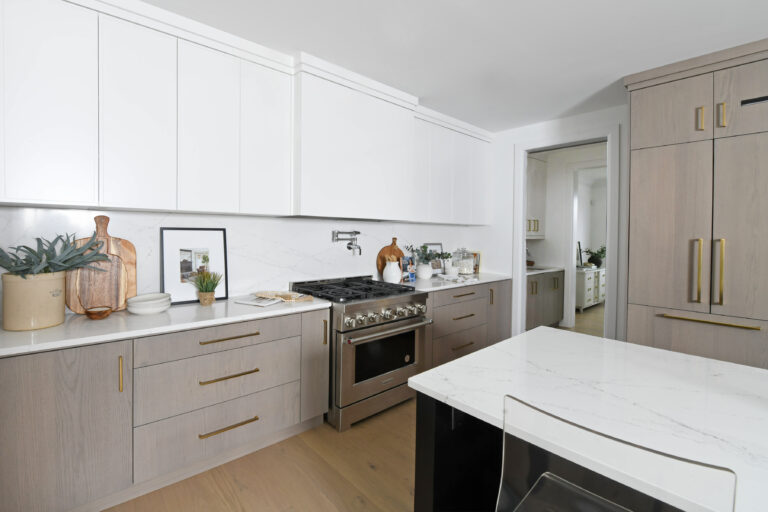
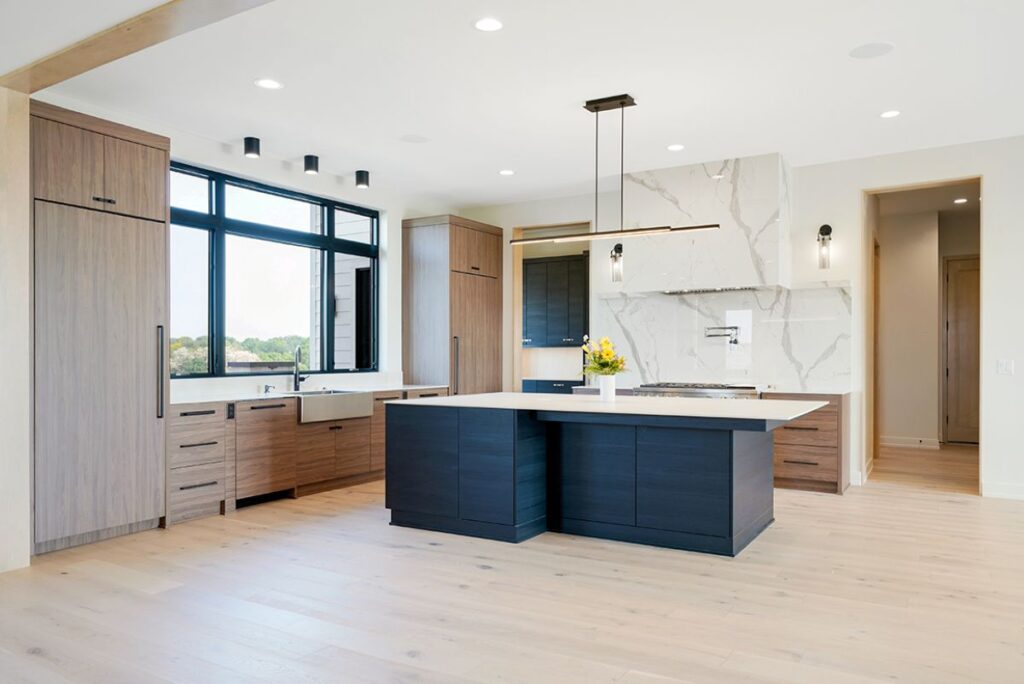
The light wood flooring works because it creates a calm base that lets the cabinetry carry the design. The pale tone keeps the kitchen open and bright, which balances the darker island cabinets and prevents the space from feeling heavy.
Light Scandinavian Inspired Kitchen
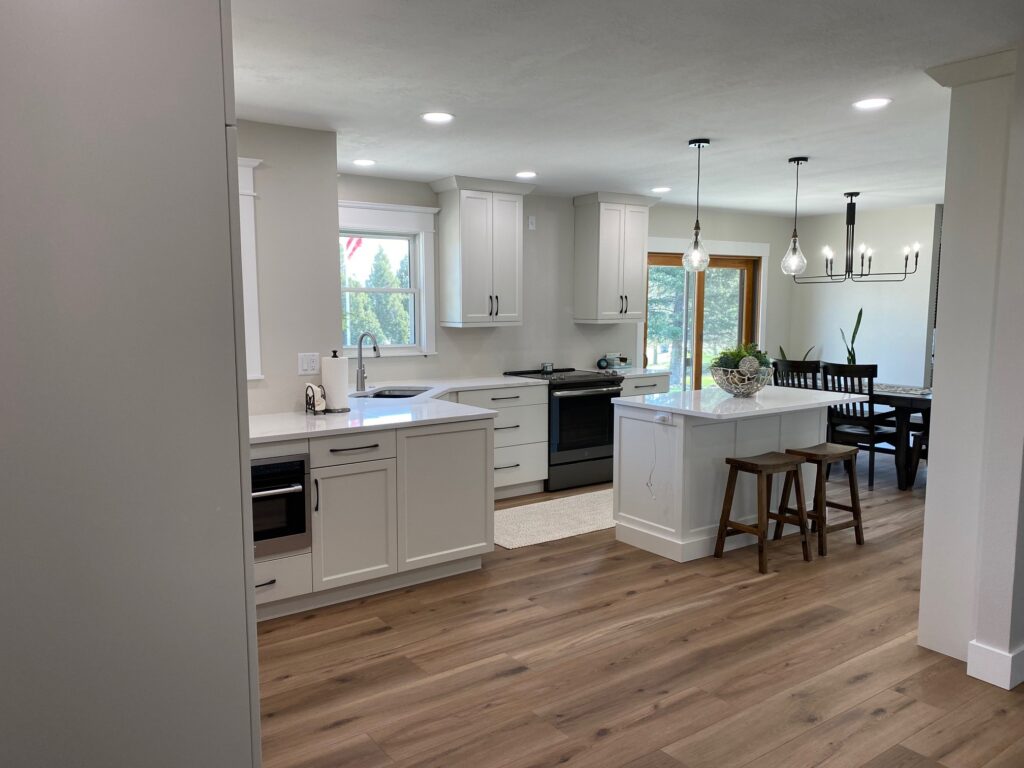
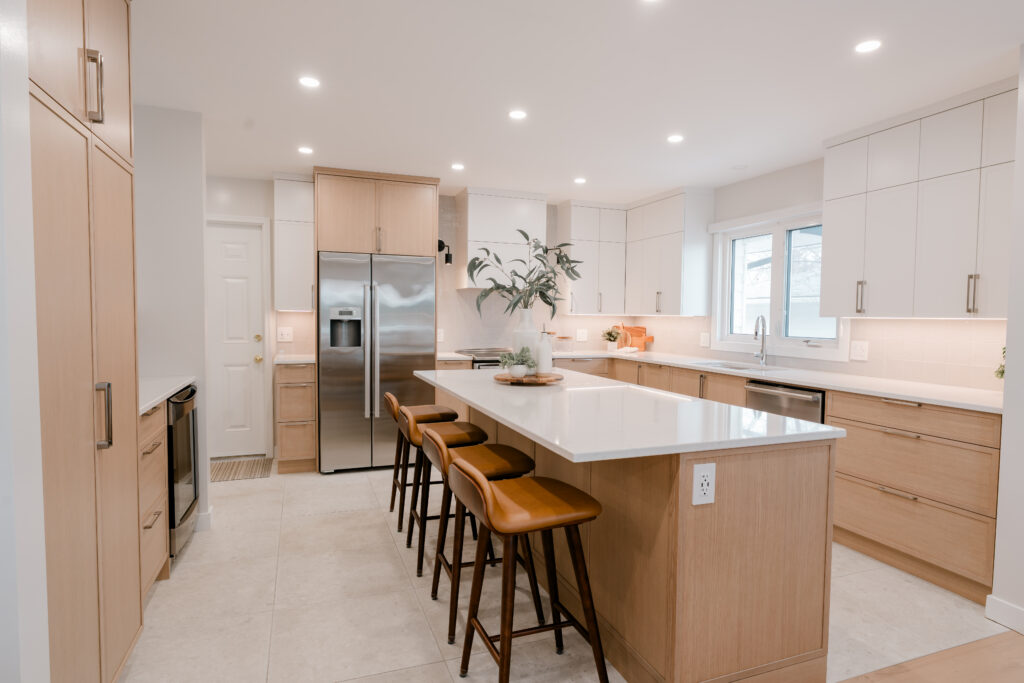
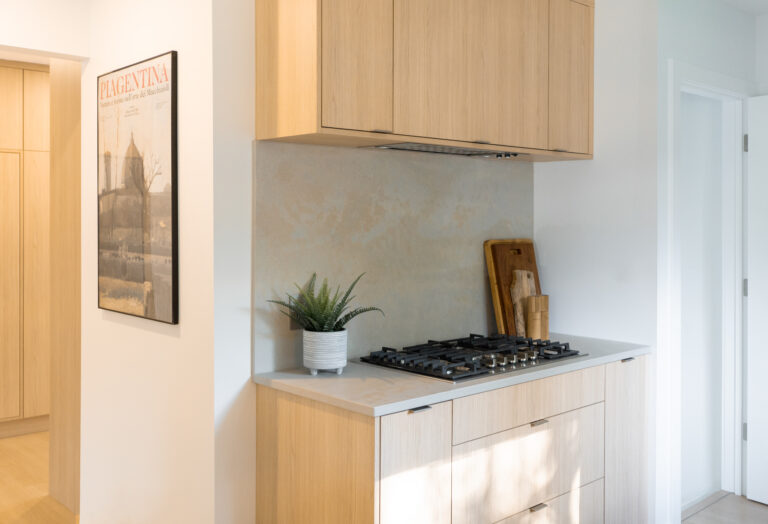
The light, neutral flooring supports the Scandinavian-inspired look by keeping the kitchen bright and open. Its soft tone and minimal variation allow the white and light wood cabinetry to feel clean and intentional rather than busy. This flooring choice reinforces the simple, airy feel.
Matching Wood Flooring and Cabinets
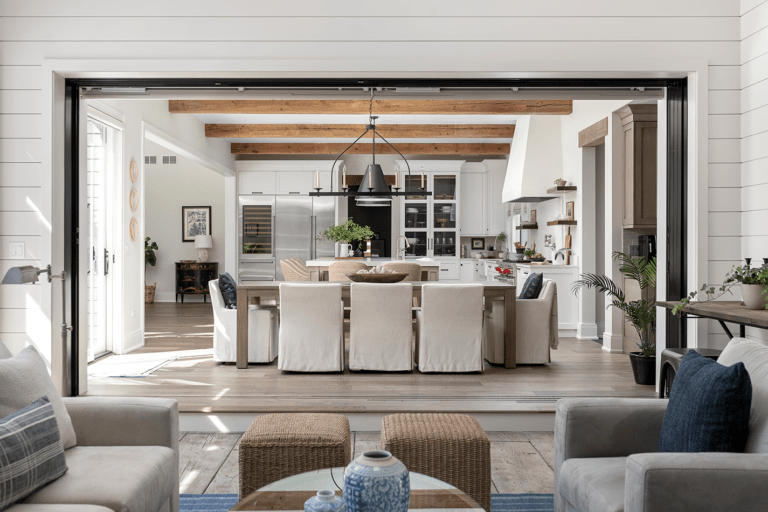
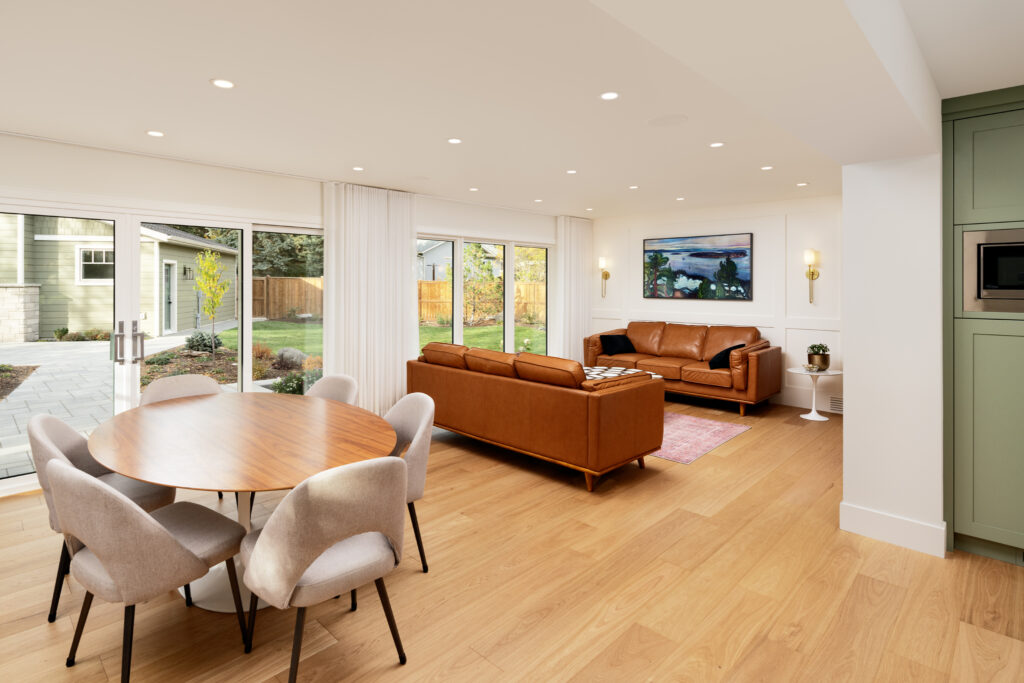
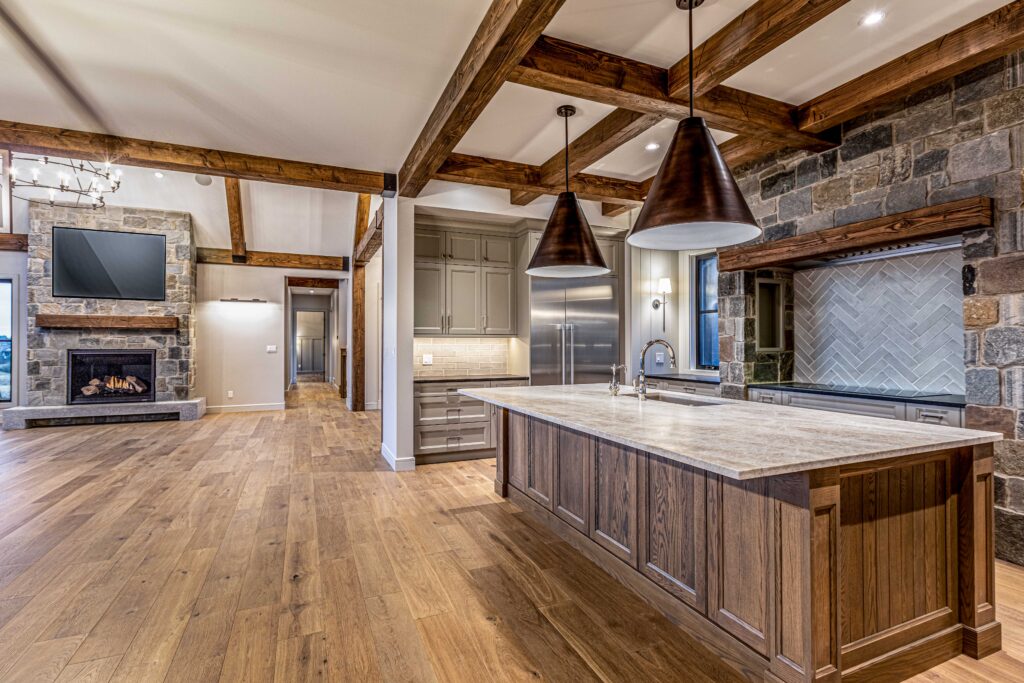
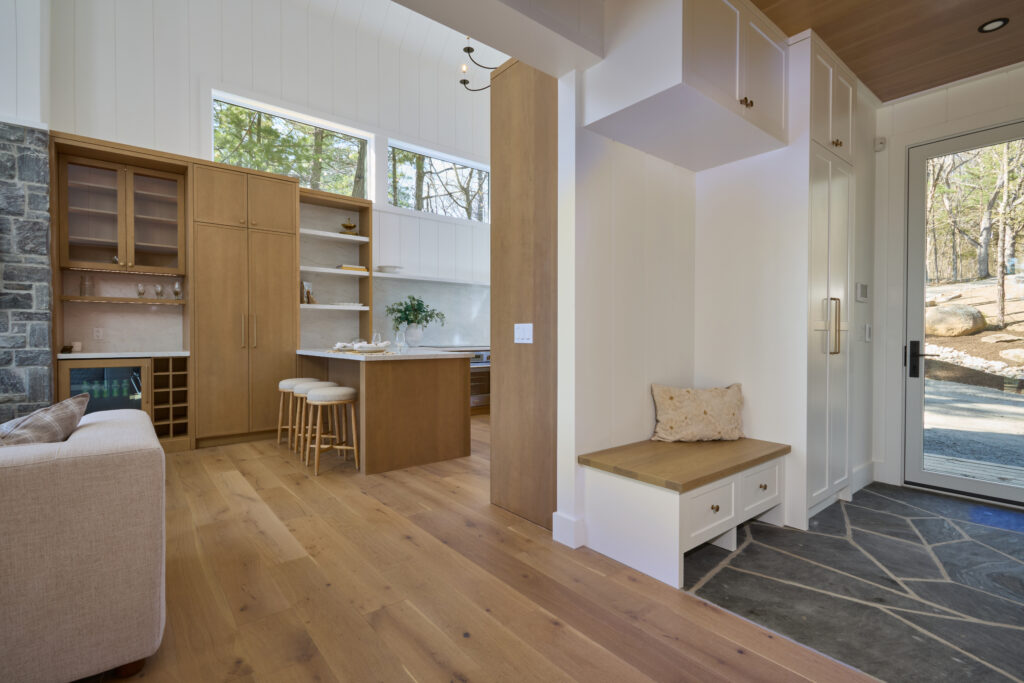
The wide plank wood flooring sets a warm, consistent base that ties the kitchen and adjacent spaces together. The wide plank floors and wood cabinets share a similar tone, which creates continuity without feeling repetitive. Clean cabinet lines and open sightlines keep the look intentional, allowing the wood elements to feel cohesive rather than overwhelming.
Classic Two-Tone White and Wood Kitchen
This flooring strengthens the transitional feel of the kitchen by acting as a visual link between classic and current elements. The consistent grain and neutral tone keep the kitchen from leaning too traditional or too modern, helping the overall design feel balanced, familiar, and intentional rather than styled to a specific trend.
Contrast Between Organic and Polished
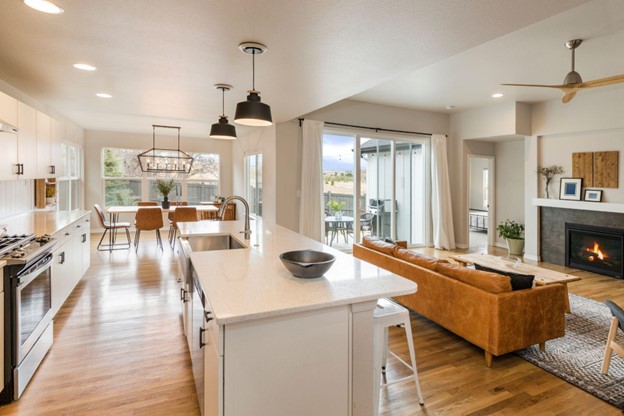
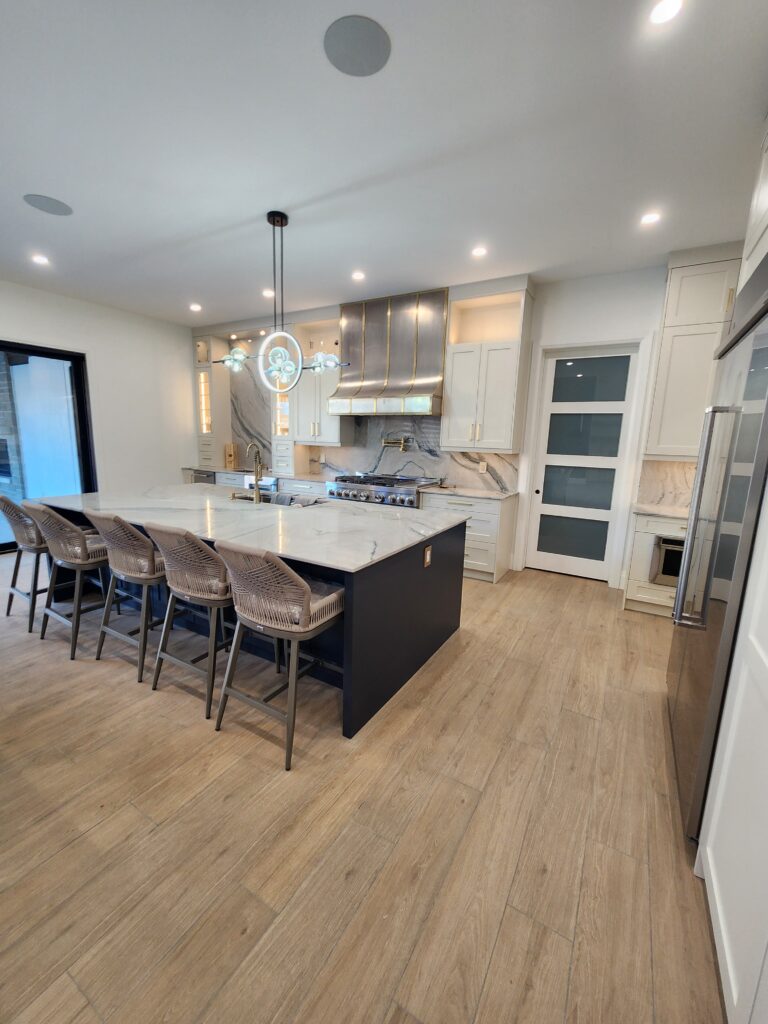
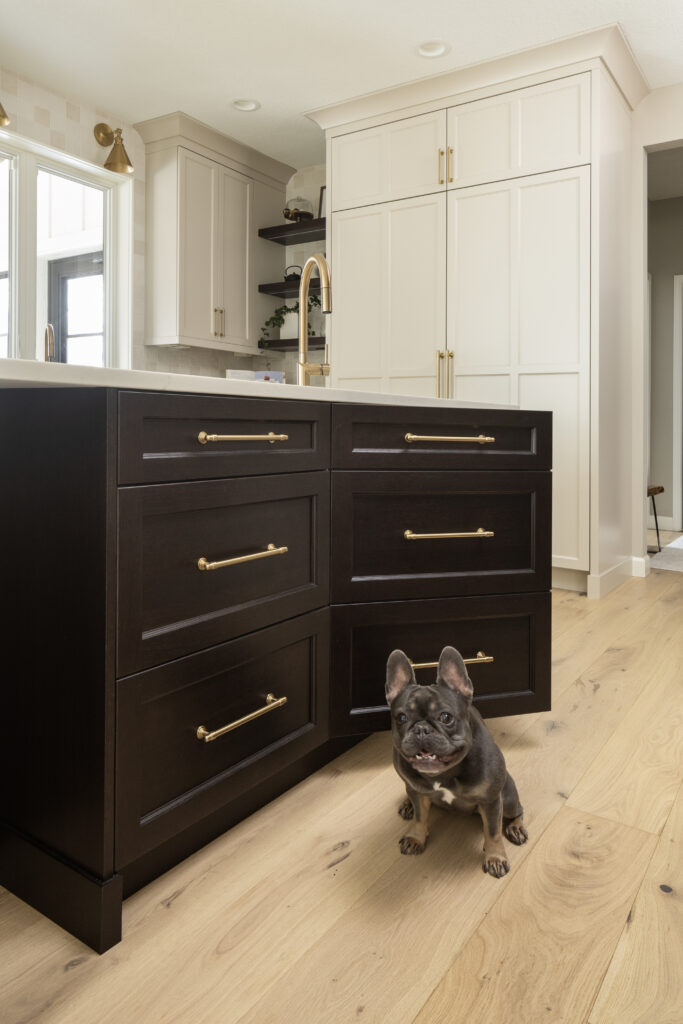
The light wood flooring brings warmth and natural texture through visible knots, which keeps the space from feeling too polished. Against that backdrop, the dark island cabinetry stands out with a strong, tailored presence that adds structure and contrast. This pairing works because the organic quality of the flooring softens the formality of the cabinetry, creating a balanced kitchen that feels refined but still relaxed and livable.
Grey Flooring with Wood and Painted Cabinets
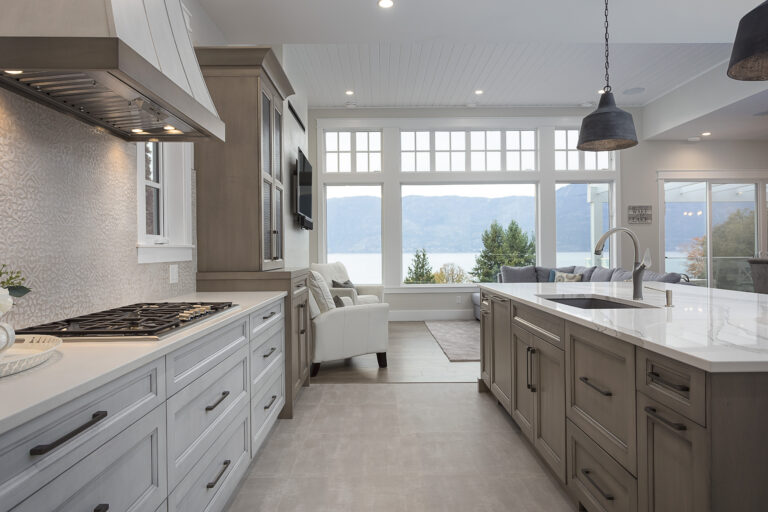
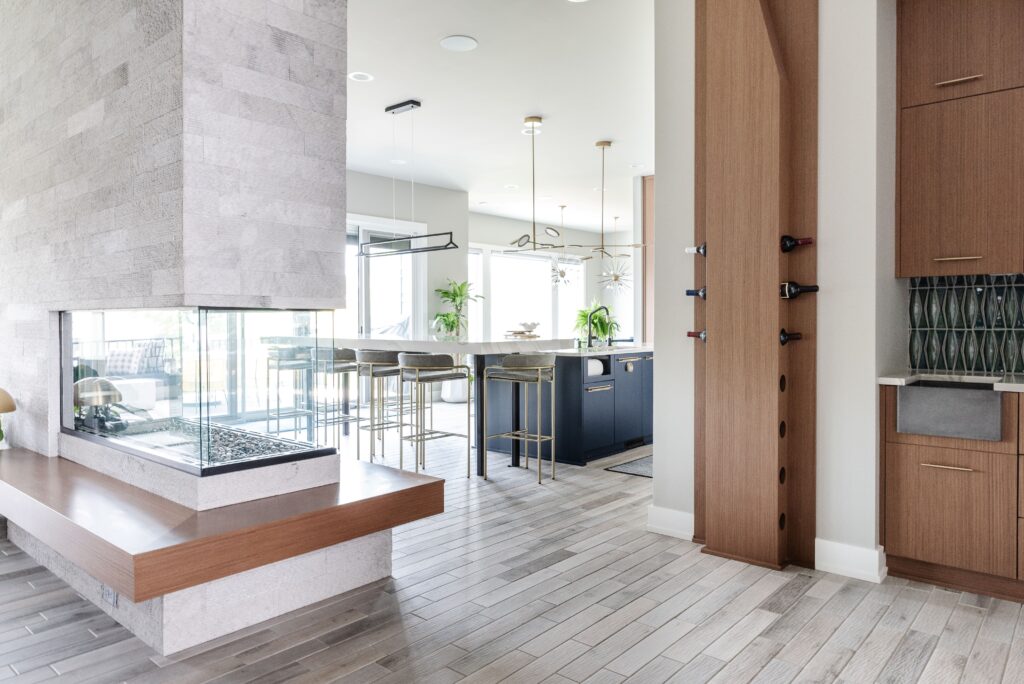
This flooring introduces cool undertones that set a calm, contemporary foundation for the space. Those cooler tones work with the clean-lined wood cabinetry, keeping the kitchen feeling modern rather than rustic. The flooring allows the cabinetry and architectural details to stand out.
Warm Wood Floors with Taupe Cabinets
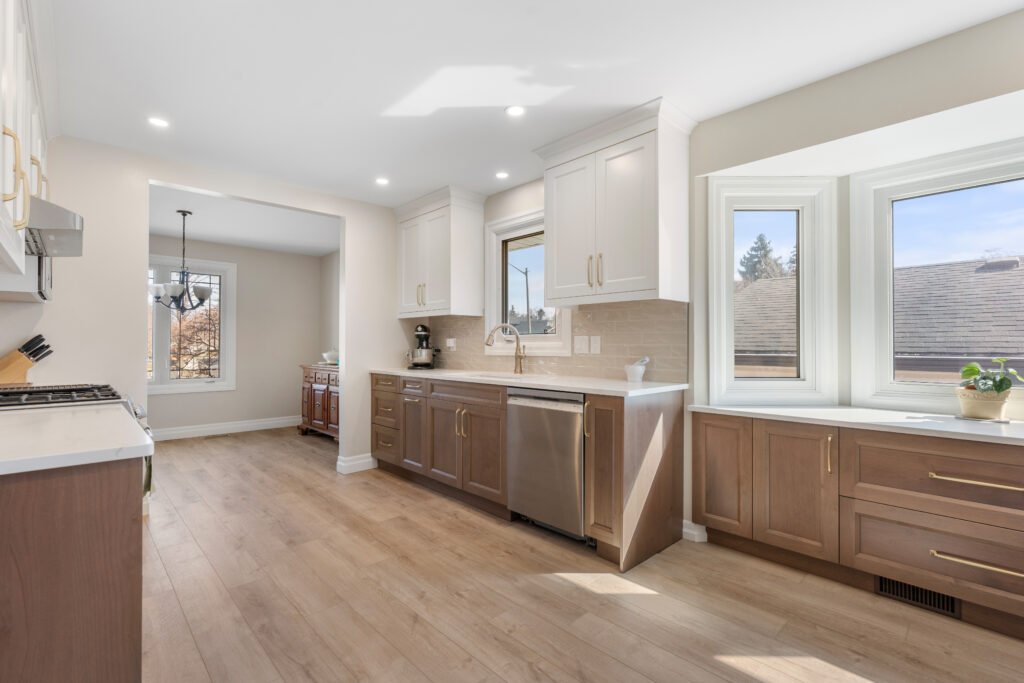
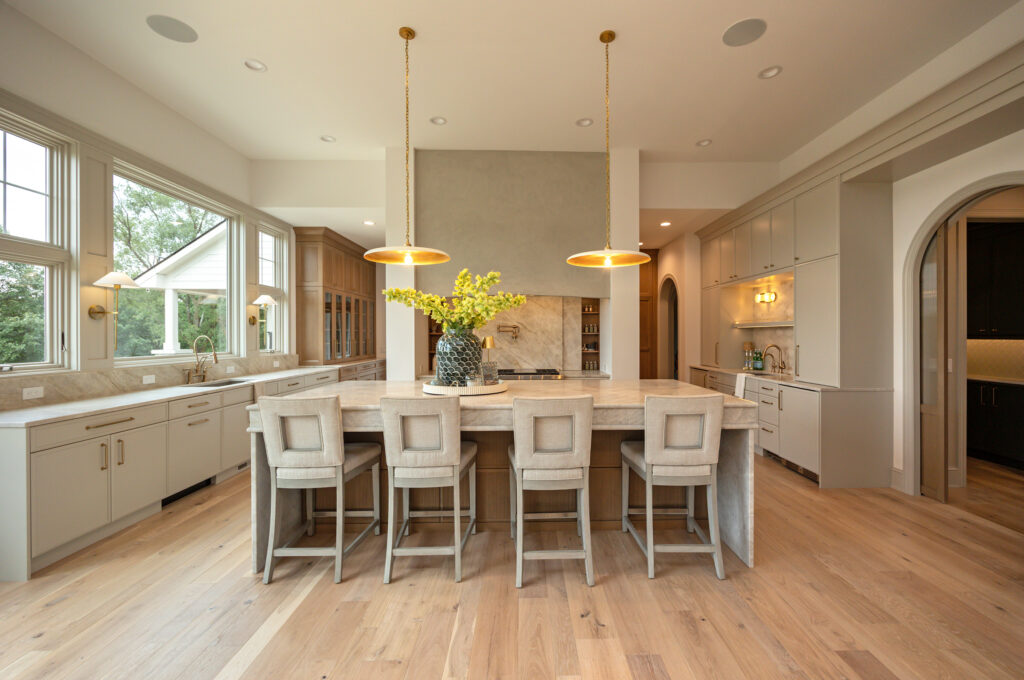
The warm wood flooring adds depth and character to the soft taupe cabinetry and walls, preventing the space from feeling flat. Its natural tone brings warmth and movement, which balances the calm, neutral palette. This pairing supports a serene, traditional look that feels welcoming and composed.
Common Questions About Matching Kitchen Flooring with Cabinets
Should flooring be lighter or darker than cabinets?
Either can work. The key is tone alignment and some level of contrast in the design. That could be between the cabinets and flooring, or with other materials.
Can cabinets be changed without replacing flooring?
Yes. Partial renovations are very common, especially when flooring is still in great condition or when flooring sprawls through the entire home.
What flooring tones pair best with cabinetry?
If you want a “safe” choice, tones that lean neutral and flexible tend to be the most versatile. They support changes over time without locking the design in. They also work better with cool or warm tone cabinets.