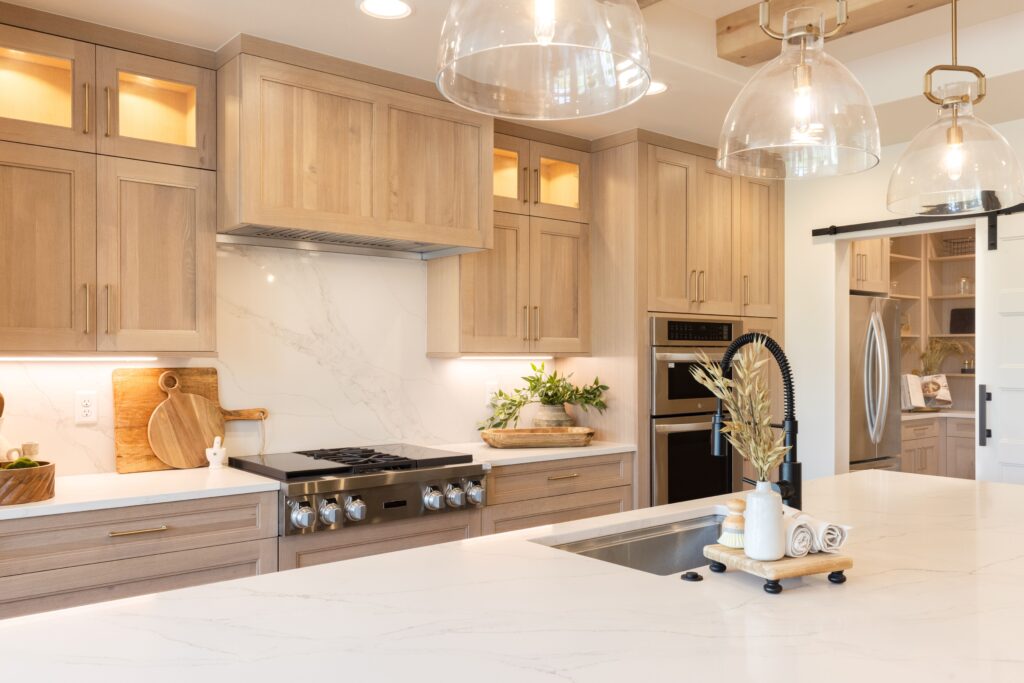
Cabinets are an important part of your home, and their durability depends on the type of wood you use. Hardwood is generally hardy and has a higher long-term value, but softwood has its perks, as well. While hardwoods are the standard for cabinets inside the home, consider your personal needs and the different wood types to find the material that works in your space.
Fundamental Differences Between the Woods
Wood’s cellular structure contributes to how it performs in your home. Know the specifics of each tree type and determine their durability and resale value.
- Softwood: This wood comes from coniferous trees, meaning they are evergreen and produce needles or cones. The wood is also less dense. Some examples include pine and cedar.
- Hardwood: This wood comes from deciduous trees, which lose their leaves annually. These trees are denser. A few examples are oak and cherry, as well as the strong and versatile maple.
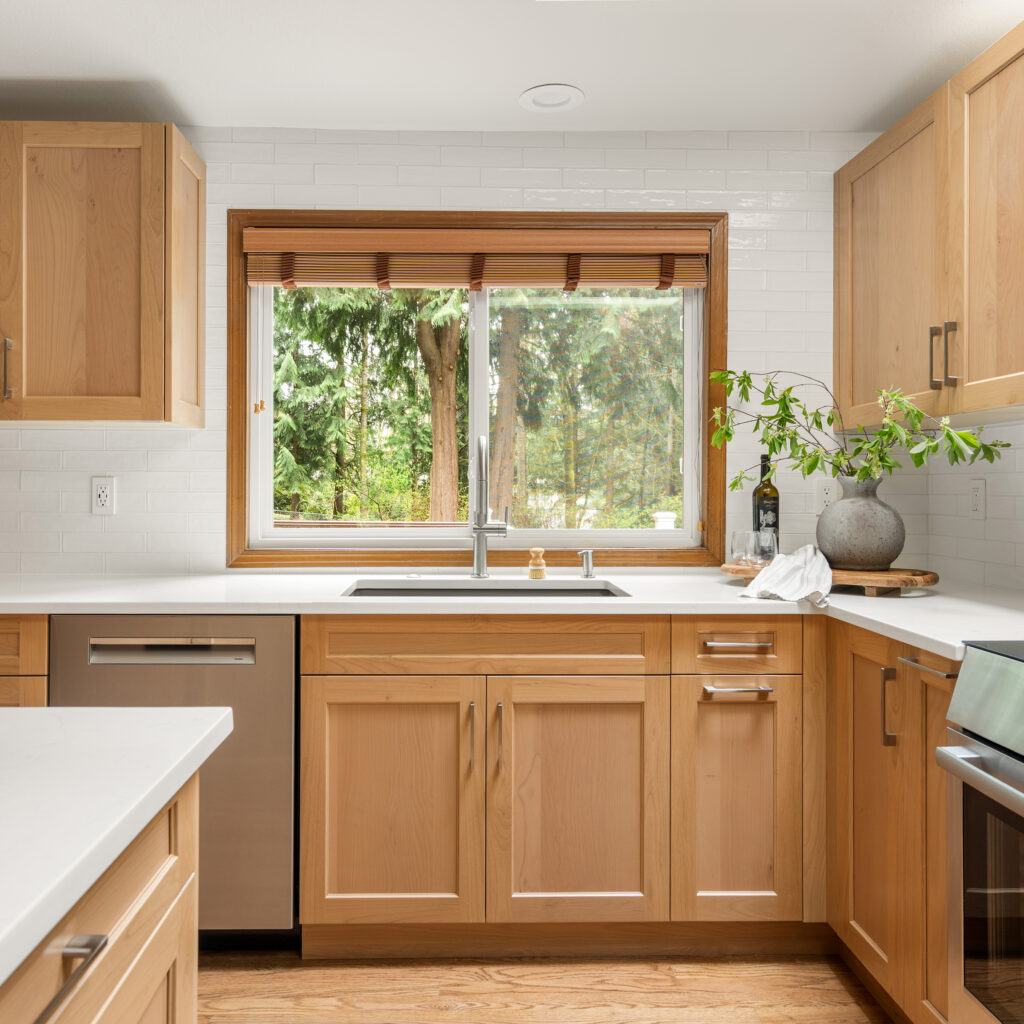
Wood Durability Comparison
Durability is a key factor when choosing cabinet wood. Even with exceptional warranty, everyday use will wear on your cabinets over time.
Hardness and Dent Resistance
The Janka Hardness Scale is a rating system for the resistance of different wood types to dents and wear. A good Janka score is typically in the thousands range. For comparison, the softwood Douglas fir’s score is 660, and the hardwood maple’s score is 1450.
Stability and Warp Resistance
Softwood and hardwood expand when they come into contact with moisture, whether from humidity or temperature shifts. This is especially important for kitchen and bathroom cabinets, where airborne liquid is common. Hardwood’s moisture retention depends on the species, whereas softwood tends to retain more overall. The room’s temperature affects both wood types equally.
Cedar is a softwood that is a popular option for outdoor furniture, saunas, and cabins as it is naturally resistant to moisture and rot.
Long-Term Maintenance
Both woods require specific upkeep to maintain their appearances and structural integrity. Homeowners must clean their cabinets weekly with mild soap and warm water and dry them immediately to prevent damage. Avoid using abrasive tools or abrupt temperature changes.
Softwood is less durable, so homeowners must maintain it consistently to keep its structural integrity. Hardwood is stronger but is still sensitive to excessive moisture that can harm its structure.
Nuanced Considerations for Wood Types
Homeowners may want to dive deeper into the nuances of softwood and hardwood before making an investment.
Sustainability
Softwood is typically more sustainable than hardwood. However, many sawmill facilities are working to reduce their carbon emissions by switching to renewable energy sources. Sourcing both wood types contribute to deforestation, but regulations are in place to help ensure the future of our forests. For example, the Kitchen Cabinet Manufacturers Association has developed an Environmental Stewardship Program.
Aesthetic and Resale Value
The wood’s appearance and aesthetic contribute to a higher home resale value. Factors like wood grain and finish matter, so choosing a long-lasting option can raise the selling price of your home. An important market trend for 2026 is timeless elements with clean lines, neutral color schemes and natural materials.
Because hardwood has greater structural integrity, it would be the better choice than softwood when you go to put your house on the market. Homeowners still expect durable, natural materials in their home and hardwood is the better option when it comes to meeting that expectation.
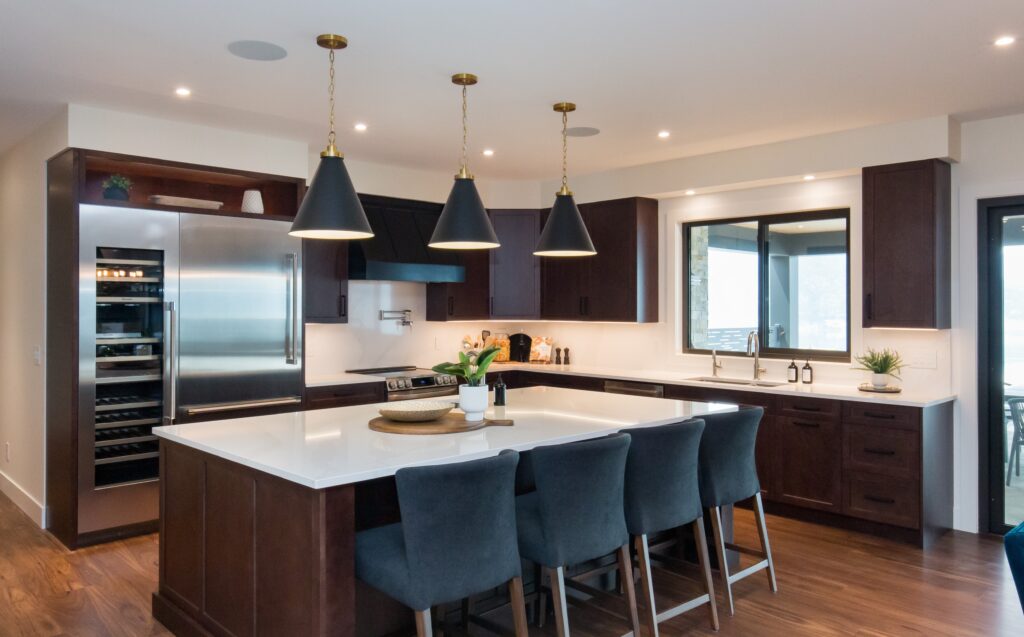
Common Woods for Cabinetry
Several hardwoods stand out as top choices for cabinets.
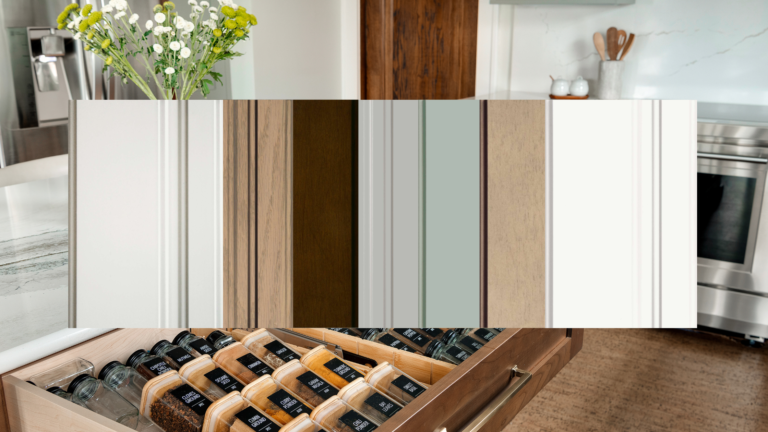
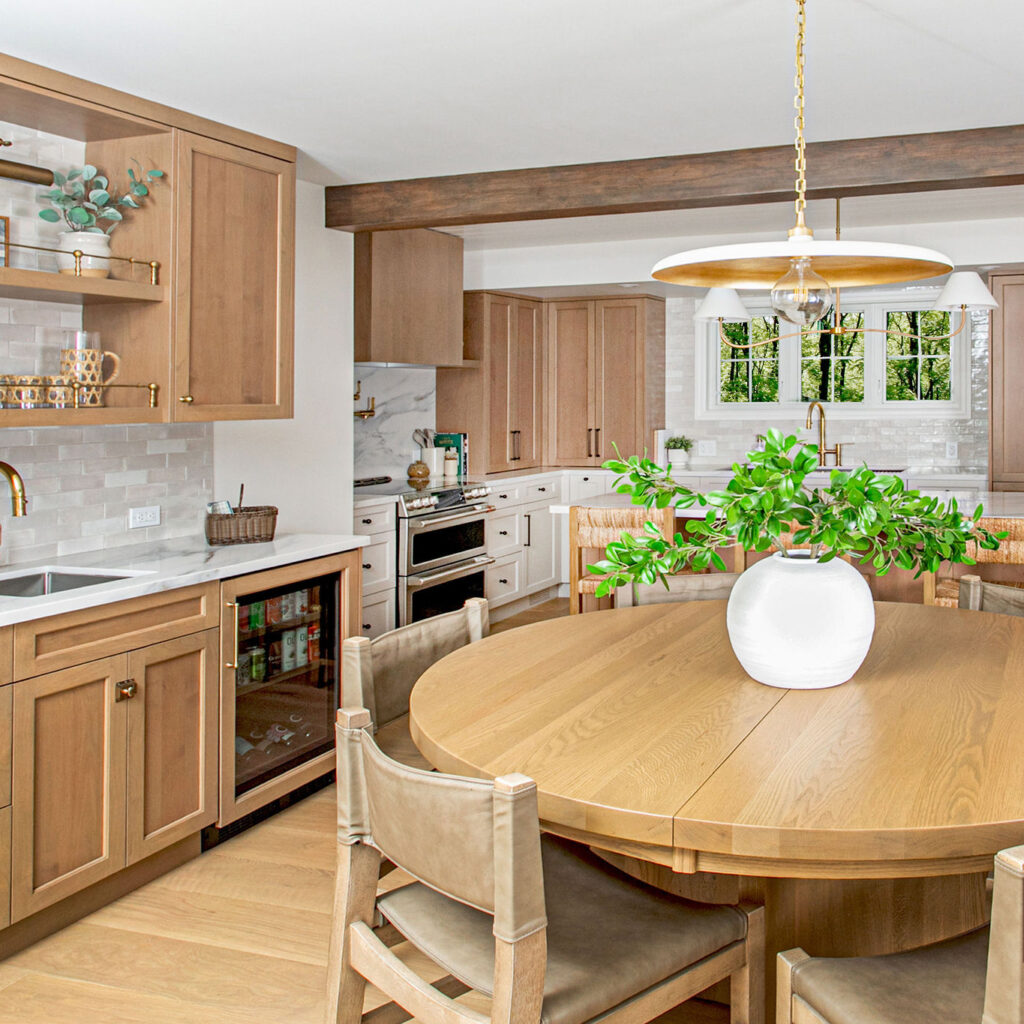
- Oak: It is a traditional wood with prominent grain and is among the most durable. White oak is especially popular right now.
- Maple: It has a smoother, finer grain than oak. If you want a painted finish on wood cabinets, maple is ideal.
- Cherry: As cherry wood ages, its color deepens. This type of wood is softer than oak, despite being a hardwood.
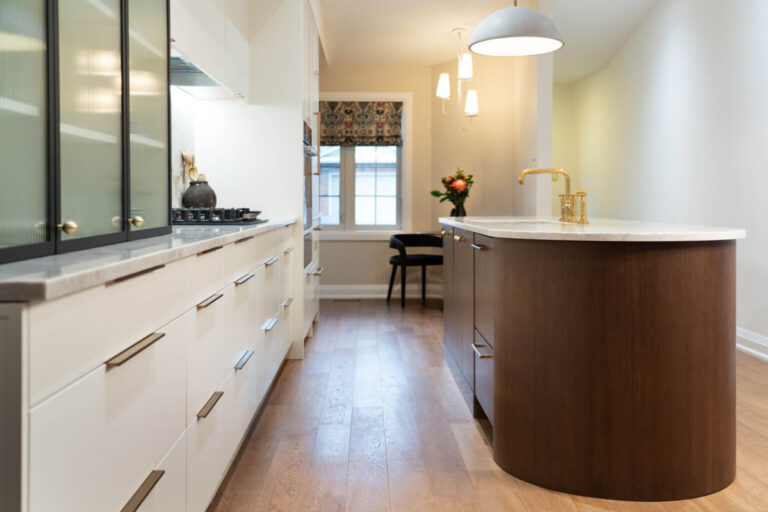
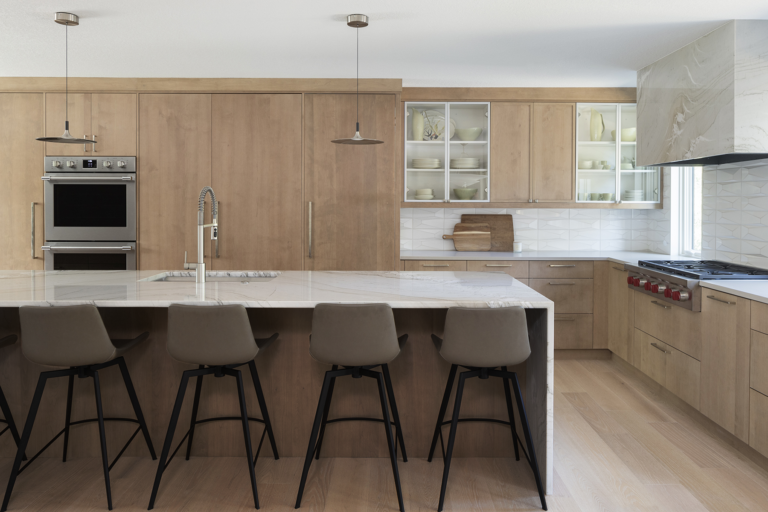
- Walnut: This wood is generally darker and has a more elaborate grain pattern. Homeowners choose it when they want cabinets that stand out. It also works well as a feature island or range hood.
If you are leaning toward hardwood cabinets, oak, maple, cherry and walnut are quality materials to consider.
Wood Comparison Table
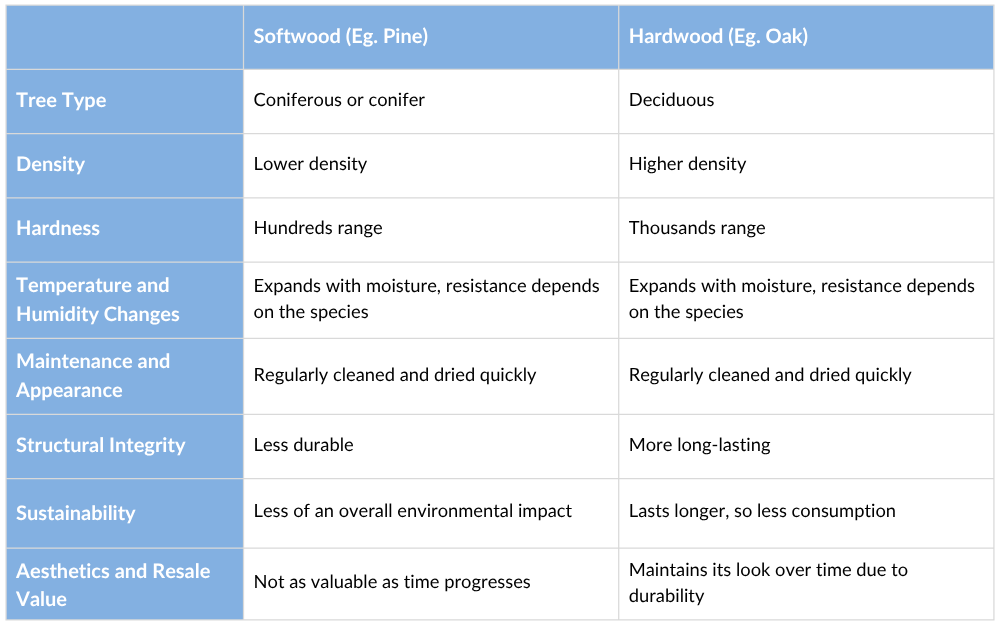
The following table summarizes the key differences between softwood and hardwood for a quick refresher.
Other Factors Affecting Durability
The wood you choose is not the only factor to consider regarding cabinets’ durability.
Cost
Cost often plays a major role in how long cabinets last. On average, wooden cupboards can range anywhere from $5,000 to $25,000 or more, depending on the material, construction quality and size of the kitchen. Custom kitchen cabinets start at $20,000 – $30,000 dollars and increase in price with more modifications and custom elements.
While softwood cabinets are typically more affordable up front, they may show wear sooner than hardwood. Hardwood cupboards generally cost more initially, but their strength and resistance to everyday damage can make them a better choice for long-lasting durability.
Intended Use and Location
Where the cabinets are installed and how often they are used can greatly impact their longevity. Kitchens and bathrooms experience more moisture and daily wear than laundry rooms or home offices. In high-traffic spaces, stronger hardwood materials often perform better over time. Considering how often the cabinets will be opened, cleaned and exposed to humidity can help with selecting a wood type that holds up well.
Wood Finish
Another factor affecting durability is the wood’s finish. High-end manufacturers typically use chemical finishes such as lacquer and varnish. They are typically more water-resistant and durable. You should decide which finish you desire, paying careful attention to each option’s protective qualities.
Treatment
The way you treat the wood is another consideration. If you consistently slam the cabinet doors and spill liquids on them, they will deteriorate more quickly. Remind children and house guests to handle them gently.
Choose the Ideal Wood for You
When selecting a wood type for your home’s cabinets, longevity, value and durability are important considerations. While hardwood is typically the better option, softwood has some unique characteristics worth considering. Since this is a permanent upgrade to your home, take care when deciding which option is ideal for you.